
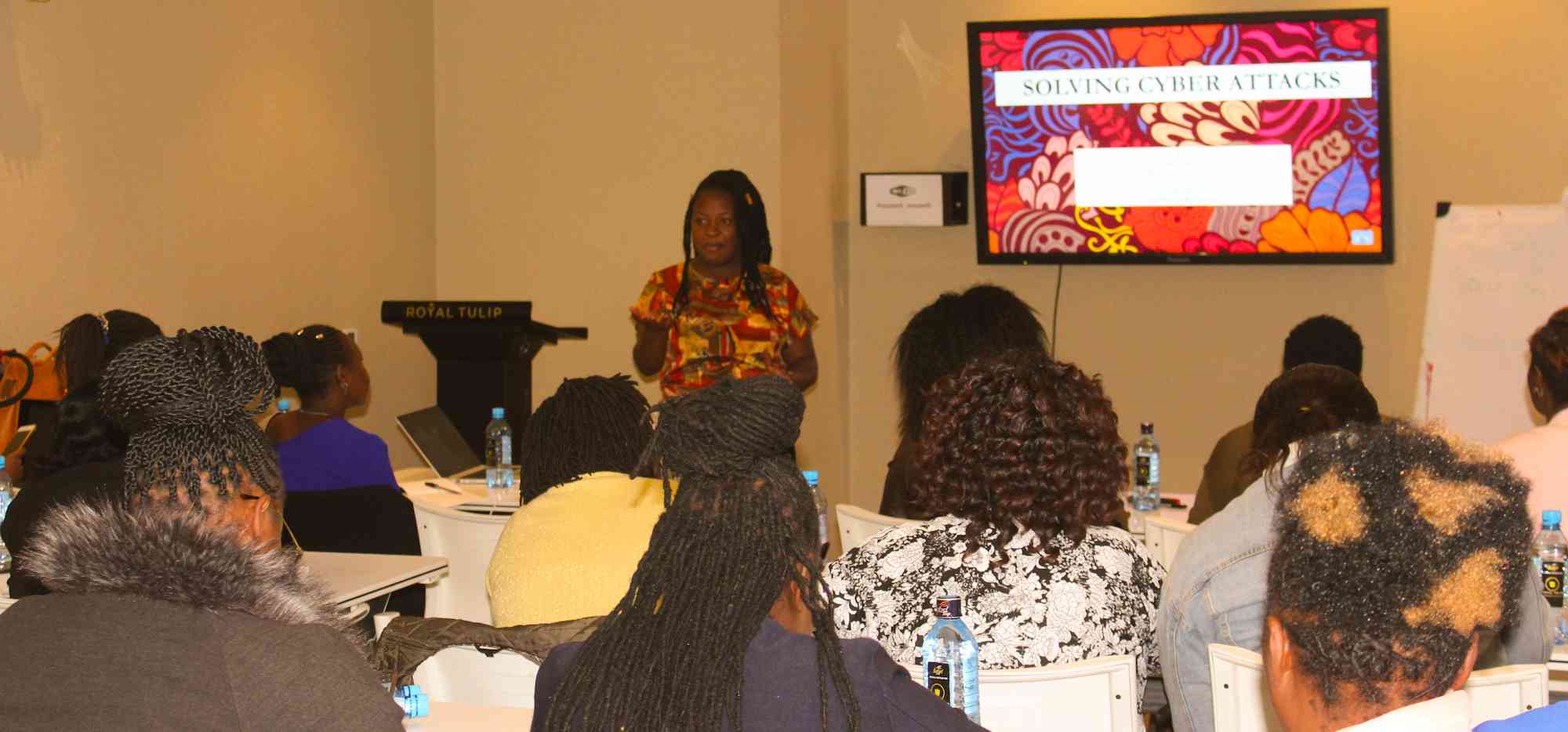
By Nelly Nyadzua My nature has always been looking out for the welfare of people. I can describe myself as very empathetic. Having the career change, going into cybersecurity with backing in artificial intelligence, is a very technical path. But I felt there is a way I can give back to the community, and not enclose the knowledge to myself. I have been training on matters of digital security and how people can guard themselves from bad actors online. That wasn’t enough. The more I worked on projects, building models and securing systems, I noticed that the policies and regulations in place are not actualized to protect the consumer. Well, you can say everyone is out the to make a profit or all. This is how I embarked on my journey to data privacy and protection. In my research, I swam into oceans of documents, articles and a very huge lingua, that as a techie…., well let’s say wasn’t favourable to a layman. On top of online research, I networked, asked questions, explained my shortcomings as I sought an interpretation of laws, and that’s how I learnt of Kenya Internet Governance (KeSIG) school convened by Kenya ICT Network (KICTANet). That was in 2018. All this time, I thought KeSIG was an add-on certification course for lawyers, ha ha (laughing emoji). One day, in 2021, a friend challenged me to look into KeSIG course content. It was more than what I thought. The school explained to students matters of internet governance affecting Kenya, Africa and privacy laws in various countries in the World ( EU GDPR, Canada, Brazil and other countries). I found it fascinating that the coverage extended beyond legal issues to include current trends in technology, artificial intelligence, and cybersecurity. I started attending the workshops held by KICTANet to sensitize citizens on digital policies and rights. In 2022, I applied to attend KeSIG and did not cut. Of course, I was heartbroken, but I didn’t lose hope. I continued to attend sensitization workshops and actively applied the skills I gained through training, advocacy on social media, and engaging with citizens. I also wrote articles on digital privacy and data governance. Additionally, I attended data privacy conferences, participated in the ISOC Kenya chapter, and joined ISACA this year. Fortunately for me, I applied for the 2023 intake and got selected! I am glad I worked on my end and talked to alumni of KeSIG in polishing my application. The classes came, WOW!!! They were intense. Talk about research! We had live classes, online module classes, class discussions and individual essays where you explained the daily topics in essays. The whole writing had me, but I came out victorious. We also had timed exams, that challenged our intellect. KeSIG is fire with a reason. I am grateful for how the faculty was always hands-on, ready to help, ready to explain and keep us in check with our daily deliverables. We also had industry key players coming to deliver sessions to us, and yes, we had to do articles on them, (smiley face). https://www.linkedin.com/posts/nelly-nyadzua_kesig-certificate-activity-7081642307090825216-Kjb9?utm_source=share&utm_medium=member_desktop I am fired up to churn out more content on advocacy on internet governance, confident in sitting and giving my opinions at tables that discuss internet governance in technology that affects me as a woman, a youth living in Africa. Today, I say thank you to all who made KeSIG 2023 a success, and if you are ever considering a starting point in internet governance, KeSIG is your step one. Nelly Nyadzua is a skilled and accomplished professional with a strong background in cloud computing, artificial intelligence, and cybersecurity. She is an AWS Cloud Practitioner and AI Graduate Student. She is also a Cybersecurity 2022 Fellow and KeSIG 2023 Fellow.
The Landmark 2023 Kenya Youth IGF
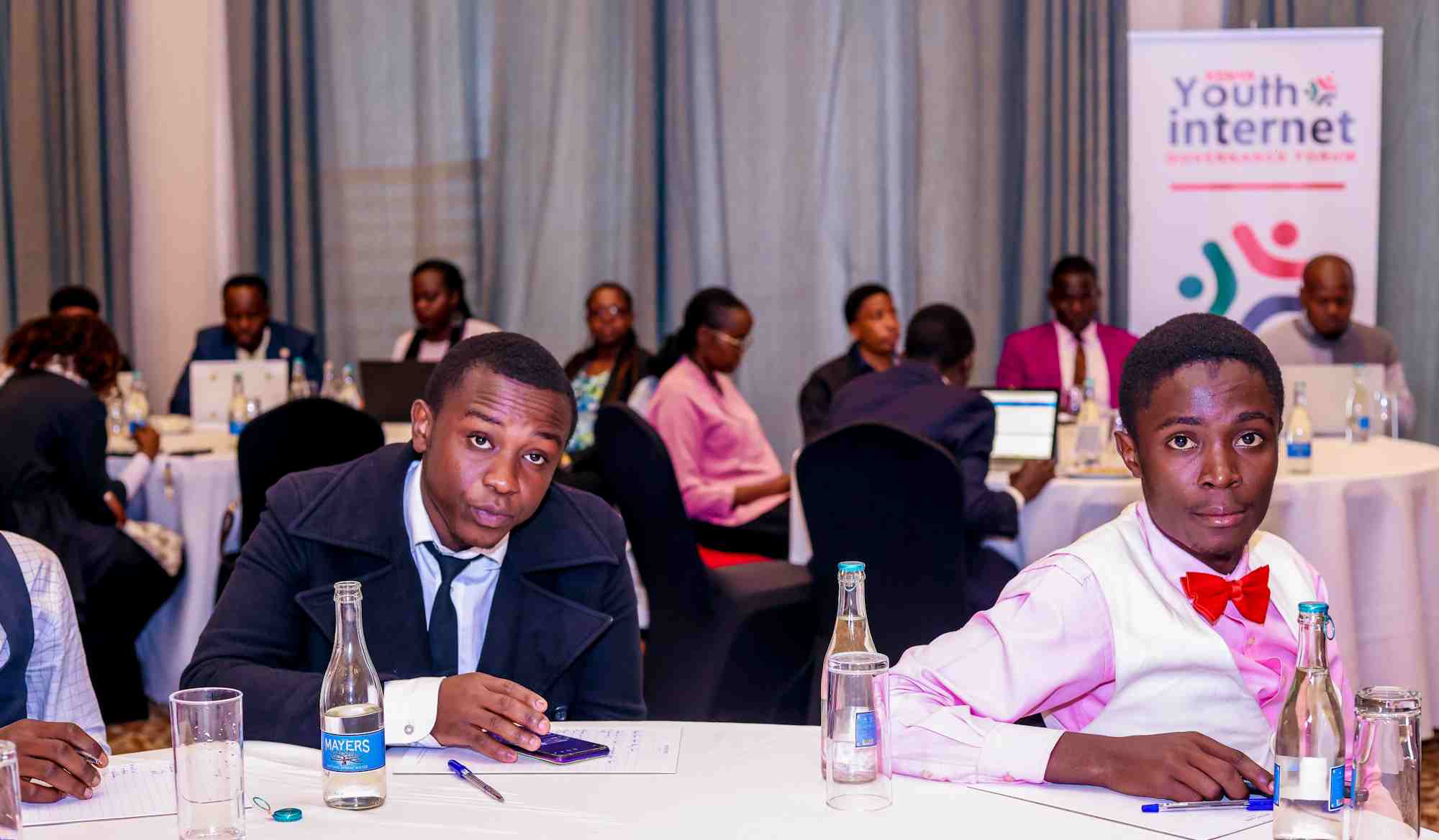
By Tabitha Wangechi The 2023 Kenya Youth Internet Governance Forum(IGF) was held on June 21st, with the theme \”The Internet we want – Empowering all Youth,\” The Forum emphasized the importance of youth\’s voices in shaping the future of the internet and attracted over 70 participants from diverse stakeholder groups, including the technical community, civil society and academia. Supported by major industry stakeholders such as Meta and the Communications Authority of Kenya, this forum provided a platform for organized youth participation. The youth-led initiative facilitated the meaningful inclusion of young people in the discussion of critical Internet governance issues, Including panel discussions on social media & mental health and capacity development in cybersecurity. Keith Andere, the Kenya Youth IGF coordinator, opened the event and highlighted its significance as the 3rd Youth IGF in Kenya, recognized by the United Nations Secretariat on Internet Governance. He mentioned various internet governance initiatives such as the East African IGF, African IGF, and the global IGF in Kyoto, Japan 2023, and called for strategic and active participation by the Kenyan Youth. Grace Githaiga, the convenor at KICTANet, stressed the importance of youth actively participating in the ICT ecosystem through avenues such as the Kenya School of Internet Governance (KeSIG) and the Youth IGF\’s Multistakeholder Advisory Group (MAG). Desmond Mushi from Meta highlighted the role of youth as ambassadors in the internet space and commended the Youth IGF for providing a platform for their voices. Senator Allan Chesang, Chairperson of the Standing Senate ICT Committee, acknowledged youth engagement in Internet governance and highlighted the importance of emerging topics like AI and content creation. He emphasized the government\’s role in digital inclusion initiatives and expressed pride in its achievements in internet governance. Dr Bright Gameli spoke on a panel on Cybersecurity and mentioned free online learning resources and mentorship opportunities while stressing the importance of a genuine desire to learn. The forum facilitated networking, collaboration, and fostering dialogue on internet governance issues affecting the youth. It also identified emerging issues such as mental health, cybersecurity and AI. The outcomes of the YouthIGF will play a pivotal role in shaping the 17th edition of the Kenya IGF. Tabitha Wangechi, is a Cybersecurity student with a background in Diplomacy and Internet Governance
KeSIG Shaping Kenya’s Internet Governance Ecosystem Through Capacity Building
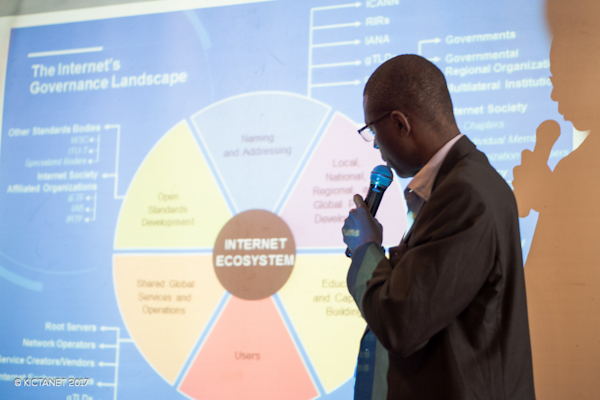
By Judy Muriuki As an avid participant in the Internet ecosystem, I was fortunate to be selected as a fellow for the 7th cohort of the Kenya School of Internet Governance (KeSIG). KeSIG is a flagship program by the Kenya ICT Action Network (KICTANet). It was the 3rd virtual edition comprising 118 participants from around the region with varied backgrounds, but all passionate about being part of the Internet Governance (IG) conversation. Through the expertise of the school’s management, presentations by industry experts and the self-paced learning system, I gained knowledge that helped me to appreciate the stakeholders within Kenya’s IG ecosystem. Beyond giving me a broader context of the roles played by actors, I got a better understanding of the contribution made by both the private sector and civil society towards the policy-making process. This contribution was made clear when the president rejected the ICT Practitioners Bill in late June and asked parliament to consider concerns raised by practitioners (Nderitu, 2022). The final two weeks of the KeSIG course became busy for me. I was completing the self-paced learning from both the KeSIG and the Internet Society (ISOC) where I had enrolled for Internet Governance courses. Doing the studies concurrently turned out to be a significant advantage for me, as I was able to contextualise and compare concepts within the global, regional and local perspectives. The conversations on WhatsApp and, the platform’s chat forum was eye-opening and motivated me to complete the readings, assignments and quizzes. By the time the Kenyan IGF, themed Resilient Internet for a shared sustainable and common future, was taking place on Thursday 30th June; I was conversant with the conversations having a good grasp of the issues, actors and policies being discussed. My biggest takeaways from this training were: I would recommend internet users enrol in this program to better understand and participate in the internet conversation. In 2016, the UN declared that it considers the internet to be a human right. This was with an addition being made to Article 19 of the Universal Declaration of Human Rights (UDHR), which states: “Everyone has the right to freedom of opinion and expression; this right includes freedom to hold opinions without interference and to seek, receive and impart information and ideas through any media and regardless of frontiers.” Section 32 adds “The promotion, protection and enjoyment of human rights on the Internet” and another 15 recommendations that cover the rights of those who work in and rely on Internet access. It also applies to women, girls, and those heavily impacted by the digital divide. As the world moves socially, politically and economically online, internet users need to understand the internet’s environment to better participate and protect themselves, their data and their networks. To continue engaging in the IG conversation around Kenya and globally, facilitators encouraged us to visit the following stakeholder websites and engage with industry stakeholders. The suggested links are below: Judy Muriuki is a digital content creator passionate about using ICT to improve the quality of life for its users, especially in Africamarginaliseded communities. Follow the writer on LinkedIn. References Nderitu, S. W. (2022, June 21). President Uhuru Kenyatta Declines to Sign ICT Bill, Sends It Back to Parliament. Tech Trends Ke. Retrieved July 7, 2022, from https://techtrendske.co.ke/president-uhuru-kenyatta-declines-to-sign-ict-bill-sends-it-back-to-parliament/
73 Students Inducted into Kenya School of Internet Governance 2023
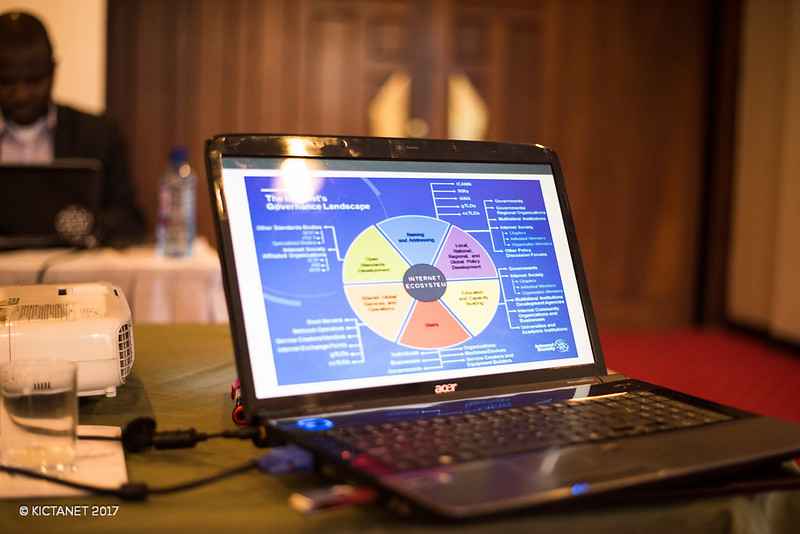
Seventy-three students were inducted into the Kenya School of Internet Governance (KeSIG). The students will become the 8th cohort since the program\’s inception in 2016. The call for applications was announced in April with the selection process going through a rigorous selection process to arrive at a group of candidates that met the robust criteria outlined by the faculty. \”We have impacted over 450 participants who have gone through this course for the last eight years. I want to inform us that we had over 300 applications, and it is always a challenge (selecting) we had to come down to 70 this year, meaning that we have cut out approximately 230,\” Mr Barrack Otieno, from the faculty disclosed. \”It is always our desire to have as many as we can take on the call, but we have to ensure that we are able to give you the best that we can do.\” KeSIG is an introductory course covering technical, economic, legal and contemporary social issues brought about by the Internet and how they affect Kenyans in decision-making. The program aims to build a critical mass of individuals advocating for Internet rights and freedoms by equipping the participants with the skills needed to participate meaningfully in local, regional and global policy discourse. KeSIG is convened by Kenya ICT Action Network (KICTANet), a multi-stakeholder platform for people and institutions interested and involved in ICT policy and regulation. Grace Githaiga, the Co-Convenor of the Kenya ICT Action Network (KICTANet), said they successfully run KeSIG. \”I want to attribute the continuation and the success of KeSIG to the participants because they have gone out to speak well of KeSIG to demonstrate what they learned. The 2023 program commenced on 2nd June 2023 and will run over three weeks culminating with the Kenya Internet Governance Forum (KeIGF), Kenya’s premier Internet Policy event. KeIGF is an annual meeting that brings together various stakeholder groups to dialogue on ICT and Internet policy was first held in 2008. The 2023 theme is “The Internet We Want – Empowering All Kenyan People“
7th Kenya School of Internet Governance Session Kicks Off
The Kenya School of Internet Governance (KeSIG) virtual sessions began Friday. KeSIG is one of the Kenya ICT Action Network’s (KICTANet) capacity building programs that aims to promote diversity and inclusion in the country’s ICT policy dialogues and beyond. The program responds to the need and importance of ensuring inclusive cyber policy. It was established in 2015 to bring in stakeholders from different backgrounds and expertise such as human rights, fintech, technologists and lawmakers to participate in Kenya ICT policy development. The KESIG course was designed to take place over three weeks. Students take the first two weeks to go through the online modules. The course covers introduction to internet governance, pathways to internet governance and participation in the internet governance processes. The third week is reserved for practical interaction with internet governance players such as ICANN, KENIC, human rights organizations, private sector and policy makers through industry presentations. The students are also expected to attend the Kenya Internet Governance Forum (KIGF). The 2022 Cohort The 2022 cohort was drawn from a pool of 331 applications. The call for participation was targeted to individuals across the country interested in ICT policy and regulations. 118 applicants were selected ensuring gender, stakeholder and regional balance: Females (62), male (54), preferred not to say (1) and other (1). In terms of sectors, within the civil society organisations (14), academia (23), private sector (53), public sector (20) and from the media. The cohort also enjoys participation from the east African Countries, Uganda and Tanzania. In Kenya, they are spread across 47 counties including Meru, Kilifi, Nairobi, Marsabit, Nyandarua, and Kisii among others. Since its inception, KeSIG has expanded the Kenyan ICT policy dialogue space, promoting inclusive policies and collaboration between stakeholders in the ICT sector. The KESIG alumni are now spread over, both in the global and National ICT policy fields. The training has enabled proactive policy interventions in digital rights, Internet access, and sector developments such as in the finance, agriculture and healthcare industries. This year’s KeSIG is being supported by Meta. KICTANet expresses huge gratitude for all the current and previous supporters. About KICTANet KICTANet is a multistakeholder think tank for Information and communications technology policy formulation whose work spans Stakeholder engagement, capacity building, research, and policy advocacy. The network was established to promote an enabling environment in the ICT sector that is robust, open, accessible, and rights-based through multistakeholder approaches.