By Judy Muriuki As an avid participant in the Internet ecosystem, I was fortunate to be selected as a fellow for the 7th cohort of the Kenya School of Internet Governance (KeSIG). KeSIG is a flagship program by the Kenya ICT Action Network (KICTANet). It was the 3rd virtual edition comprising 118 participants from around the region with varied backgrounds, but all passionate about being part of the Internet Governance (IG) conversation. Through the expertise of the school’s management, presentations by industry experts and the self-paced learning system, I gained knowledge that helped me to appreciate the stakeholders within Kenya’s IG ecosystem. Beyond giving me a broader context of the roles played by actors, I got a better understanding of the contribution made by both the private sector and civil society towards the policy-making process. This contribution was made clear when the president rejected the ICT Practitioners Bill in late June and asked parliament to consider concerns raised by practitioners (Nderitu, 2022). The final two weeks of the KeSIG course became busy for me. I was completing the self-paced learning from both the KeSIG and the Internet Society (ISOC) where I had enrolled for Internet Governance courses. Doing the studies concurrently turned out to be a significant advantage for me, as I was able to contextualise and compare concepts within the global, regional and local perspectives. The conversations on WhatsApp and, the platform’s chat forum was eye-opening and motivated me to complete the readings, assignments and quizzes. By the time the Kenyan IGF, themed Resilient Internet for a shared sustainable and common future, was taking place on Thursday 30th June; I was conversant with the conversations having a good grasp of the issues, actors and policies being discussed. My biggest takeaways from this training were: I would recommend internet users enrol in this program to better understand and participate in the internet conversation. In 2016, the UN declared that it considers the internet to be a human right. This was with an addition being made to Article 19 of the Universal Declaration of Human Rights (UDHR), which states: “Everyone has the right to freedom of opinion and expression; this right includes freedom to hold opinions without interference and to seek, receive and impart information and ideas through any media and regardless of frontiers.” Section 32 adds “The promotion, protection and enjoyment of human rights on the Internet” and another 15 recommendations that cover the rights of those who work in and rely on Internet access. It also applies to women, girls, and those heavily impacted by the digital divide. As the world moves socially, politically and economically online, internet users need to understand the internet’s environment to better participate and protect themselves, their data and their networks. To continue engaging in the IG conversation around Kenya and globally, facilitators encouraged us to visit the following stakeholder websites and engage with industry stakeholders. The suggested links are below: Judy Muriuki is a digital content creator passionate about using ICT to improve the quality of life for its users, especially in Africamarginaliseded communities. Follow the writer on LinkedIn. References Nderitu, S. W. (2022, June 21). President Uhuru Kenyatta Declines to Sign ICT Bill, Sends It Back to Parliament. Tech Trends Ke. Retrieved July 7, 2022, from https://techtrendske.co.ke/president-uhuru-kenyatta-declines-to-sign-ict-bill-sends-it-back-to-parliament/
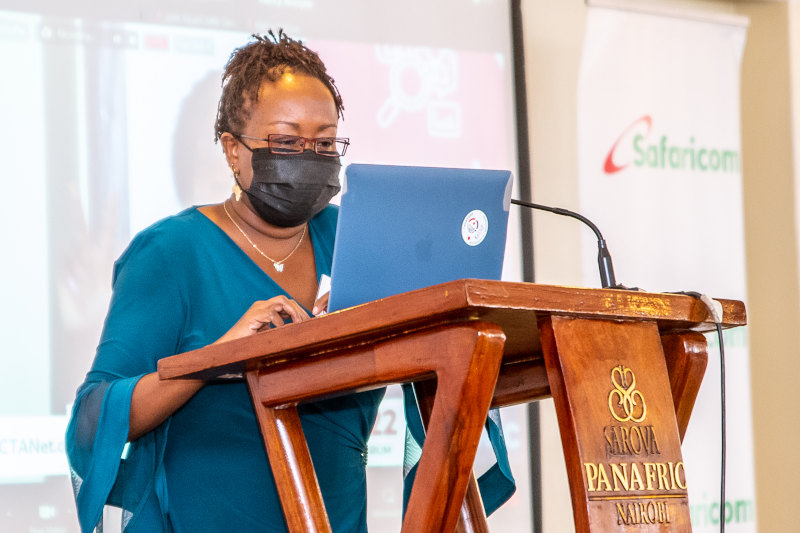
Remarks by Grace Githaiga, Convenor, KICTANet on the auspicious occasion of the 15th edition of the Kenya IGF.
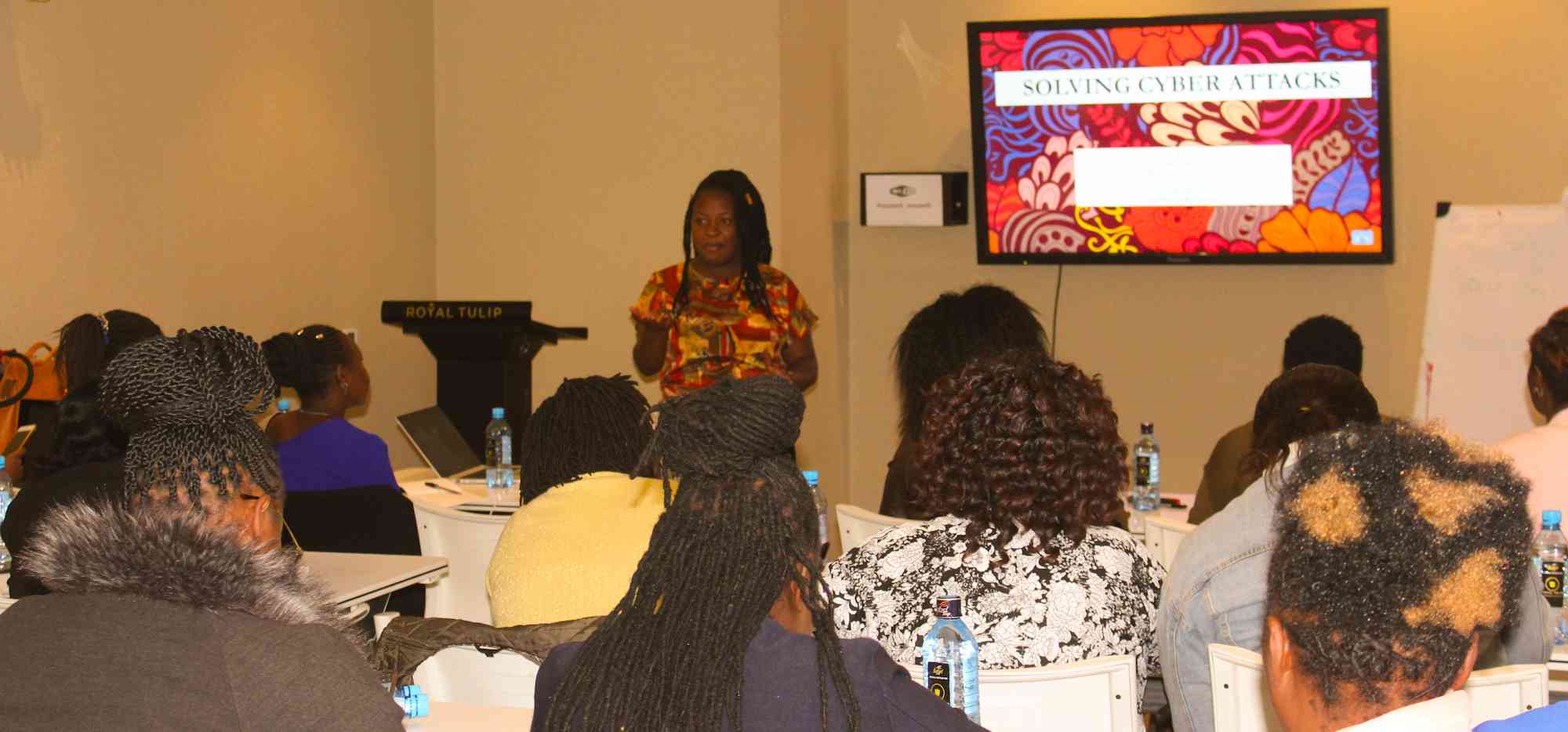
On behalf of KICTANet, Welcome to the 15th edition of Kenya IGF. About KICTANetThe Kenya ICT Action Network (KICTANet) is a multistakeholder think tank for ICT policy and regulation. The network acts as a catalyst for reform in the ICT sector and is guided by four pillars: policy advocacy, stakeholder engagement, capacity building, and research. KICTANet’s guiding philosophy is that of encouraging synergies for ICT policy-related activities and initiatives. The network provides mechanisms and a framework for continuing cooperation, engagement and collaboration in ICT matters among industry, technical community, academia, media, development partners, civil society and government. Activities for Kenya IGFThe Internet Governance Forum (IGF) is an open and inclusive multi-stakeholder forum where public policy issues related to key elements of Internet governance, such as the Internet’s sustainability, robustness, security, stability, and development. The purpose of the IGF is to maximise the opportunity for open and inclusive dialogue and the exchange of ideas on Internet Governance (IG) related issues; create opportunities to share best practices and experiences; identify emerging issues and bring them to the attention of the relevant bodies and the general public, and contribute to capacity building for Internet governance. The National Country forums such as we are holding today are localised and their outcomes feed into each other from country to sub-regional then regional level, and finally culminating in a report that is presented at the global level during the Global IGF. And this year, the global event will take place in Ethiopia in November. This year’s global IGF theme is ‘Resilient Internet for a shared sustainable and common future’. The Kenya IGF theme is aligned to the global IGF theme and will respond to the local context including the upcoming 2022 general election. The following are the activities for the Kenya IGF: Began with the KeSIG which took two weeks and is an annual training to induct new and fresh voices into the ICT policy-making process.In collaboration with GIZ, we conducted a three-day women’s digital security Training of Trainers. 20 women aged between 18-34 years were drawn from social justice organizations, civil society and the private sector. A Roundtable Meeting on Women’s Privacy and Data Protection in the context of Elections included the launch of a policy brief on privacy concerns for women. In the afternoon, a Community of Practice Event was held on Module 5 of the Digital Enquirer Kit on Online Gender-Based Violence. In collaboration with Meta Platforms Inc, held an engagement with over 50 representatives to discuss privacy concerns on online platforms for Kenyans. In collaboration with CIPESA, we launched two study reports. One on Disinformation Pathways, in the electioneering period, and the other on data governance. In collaboration with the UK Digital Access Program partners, ICTA, KFCB APDK and British Council we conducted training on cyber hygiene with women, Persons living with Disabilities, and youth from Mathare, Kibera and Mukuru. This training is part of our cyber hygiene campaign to equip marginalised and digitally excluded communities with practical skills on how to stay safe online. We also held the Kenya Youth IGF, which seeks to bring the voices of the youth into internet governance Later today, we shall have a Fireside event which shall be the launch of the Digital Readiness of e-Government in Kenya, which we have collaborated with the GIZ, and the Estonia E-governance academy And the culmination of the events is today’s Kenya IGF whose, which is the 15th edition, and its theme is resilient internet for a shared and sustainable common future. The theme: ‘Resilient Internet for a shared sustainable and common future’.I want us to pose and reflect on the journey of the internet in Kenya which we can trace way back 30 years. Years ago, the main concerns were access and affordability. Then we moved to how to roll out e-government services with KRA making it mandatory to file taxes online, confirming that the Internet had now entered into Maslow’s hierarchy of needs. Discourse then moved to content creation to diversity and moderation, harms and risks arising from Internet use, such as cybersecurity, privacy, hate speech and disinformation. Then COVID-19 happened and boom! Seasons changed! More people including school children, doctors, pharmacies, – and even those who had been reluctant to embrace ICTs, moved online, including moving the KIGF online in these two last years. Now we are starting to see the need to address some of the emerging challenges for the public. For example, the need to make cyber hygiene an everyday normal practise akin to the way all of us learnt to automatically wash or sanitise our hands during covid. We also need to find ways to combat disinformation and fake news, promote responsible use of the Internet during elections, enhance data governance, and ensure digital inclusion and last-mile connectivity to ensure that no one is left behind etc. More importantly, we need to continuously think, and debate about what the future of the internet should look like. We need to think of the unimagined technologies, that have yet to be developed, the good they propose and the new risks that they present. What are these things that we have not thought about? What will the future look like? Will we be moving to Metaverse? How do we prepare for this? How will the internet look like 10 to 20 years from now? Ideas that come from this meeting are going to be critical for our kids, and future generations. For example, how generation Z is using the internet today, is so different from mine, and so will it be for the next generation. The IGF is the place where these conversations commence and happen. The main outcome of the Kenya IGF is to maximise opportunities for open and inclusive dialogue and the exchange of ideas on Internet Governance (IG) related issues through multistakeholderism. We have different stakeholders in this room drawn from the government, the private sector, CSOs etc (as defined in the WSIS Document of 2005). This, therefore, is an opportunity for us to reflect on the future—the unimagined and how well prepared we
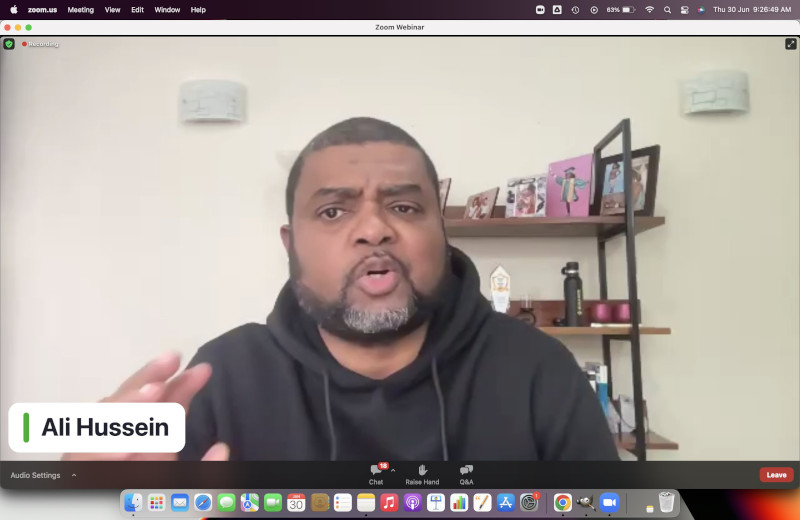
KICTANet Chairman Ali Hussein opening remarks at the KeIGF 2022
Greetings Ladies and Gentlemen I would like to begin by thanking the KICTANet team, our sponsors and all those who participated in bringing all of us together for this year’s Kenya Internet Governance Forum 2022. This year’s global IGF theme is ‘Resilient Internet for a shared sustainable and common future’ and indeed the Kenya IGF theme is aligned to the global IGF theme and will respond to the local context including the upcoming 2022 general election. In the course of this day, we shall discuss topics at the centre of data governance and privacy, Technology and elections, internet connectivity and other emerging issues. A lot has happened in the past year, for example, Kenya enacted three sets of Data Protection Regulations that are necessary to operationalize the Data Protection Act, with the registration of data controllers and data processors set to commence in July 2022. These laws have an unprecedented impact on all sectors of the economy from finance to healthcare causing us to put our people at the centre of business models. In the same breadth, access to meaningful internet connectivity for all Kenyans is growing. The Communications Authority enacted a licensing framework for community networks that allows them to gain access to spectrum and influences them to design funding models that promote their sustainability. The authority is also promoting access to the internet for persons with disabilities. We as KICTANet are members of the UK Digital Access Program and together with other stakeholders continue to work for an inclusive and accessible internet. However, for internet access to be meaningful, users must also have knowledge of cyber hygiene that allows them to avoid cyber risks and threats. To this end, we applaud efforts by the government to enact a national action plan on child sexual exploitation and abuse that will see the government implement reforms to ensure child online protection. However, as we draw closer to elections, we must interrogate the role of technology in elections. In the past elections, we witnessed the use of personal data in political campaigning. Largely, personal data is an asset for private entities and political parties that can be utilized to influence a voter’s choice through microtargeting, robocalls and sending personal messages through bulk SMSs. During the 2017 elections, political campaigns were also able to influence a voter’s first impression by using attack adverts. For example, a simple search for a word like Scandal, the movie, brought results on scandals linked to the Cambridge Analytica Campaign. Beyond the use of filter bubbles, voter profiling and data-driven campaigns, hate speech and inciteful speech, misinformation and disinformation are aspects of great concern during elections. Already we have witnessed a rise in electoral misinformation on various platforms that according to research is amplified by platform algorithms. In the same breadth, online gender-based violence continues to spur across the net, shrinking the ability of women in particular to exercise their right to free expression and association online. On a positive note, we bear witness to the fruit of our advocacy. In line with our recommendations for social media companies to strengthen policies and enforcement on political messaging and electoral misconduct. This past week Meta (the holding company that owns Facebook) informed us of steps taken by the platform to increase electoral integrity such as providing transparency on who is paying for political ads and hosting ads in the ad library. This is against other wins such as growing appreciation for data protection impact assessments by government and the private sector for processing of data that poses a high risk to individuals. These wins are a step in the right direction calling for us to be ever more vigilant in our efforts to uphold our digital rights. As we begin these interesting discussions today, I hope this presents us with an opportunity to critically assess how far we have come and what efforts we need to do together, in the spirit of multstakeholderism to ensure a resilient internet. Asanteni Ali Hussein is the Chairman of KICTANet.Twitter.Linkedin.
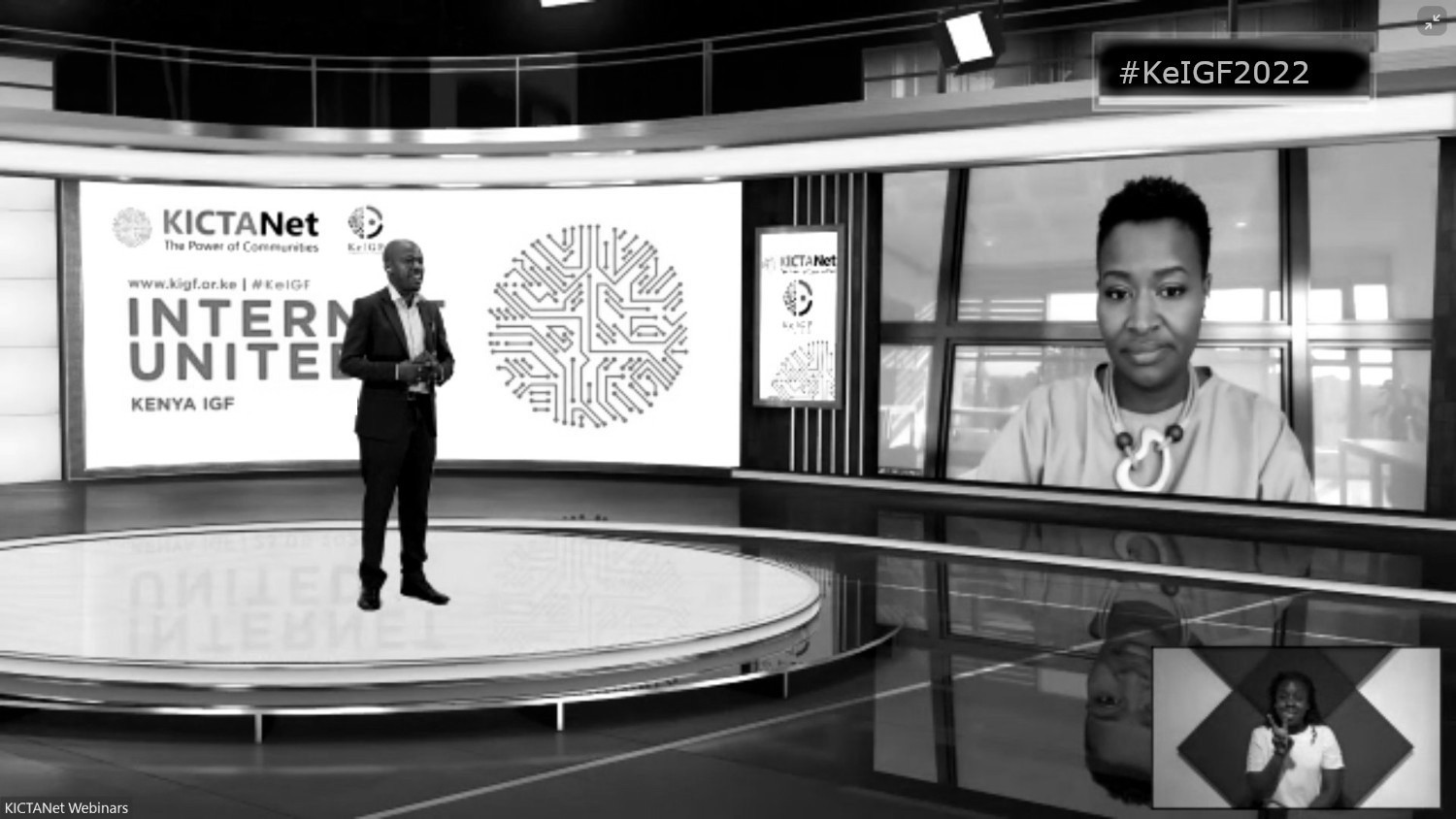
2022 Kenya Internet Goverance Forum #KeIGF
Hybrid Forum: 30 June 2022. 2022 Theme: \”Resilient Internet for a shared sustainable and common future\”. ANNUAL Kenya IGF Programs. The 2022 Kenya IGF Program The 2021 Kenya IGF Program The 2020 Kenya IGF Program The 2019 Kenya IGF Program The 2018 Kenya IGF Program The 2017 Kenya IGF Program The Internet Governance Forum (IGF) is an open and inclusive multi-stakeholder forum where public policy issues related to key elements of Internet governance, such as the Internet’s sustainability, robustness, security, stability and development are discussed. The United Nations Secretary-General formally announced the establishment of the IGF in July 2006 and the first meeting was convened in October 2006. The purpose of the IGF is to maximize the opportunity for open and inclusive dialogue and the exchange of ideas on Internet Governance (IG) related issues; create opportunities to share best practices and experiences; identify emerging issues and bring them to the attention of the relevant bodies and the general public; and contribute to capacity building for Internet governance. The event brings together stakeholders representing government, the private sector, civil society, the technical and academic community, media and the public in an informal setting for policy dialogue on Internet governance issues on an equal basis through an open and inclusive process. This type of cooperative engagement is usually referred to as the multistakeholder model of Internet Governance, which is one of the key features for the Internet’s success. This model is paramount to ensure that the Internet remains sustainable for economic and social development. KICTAnet in partnership with Industry stakeholders, convenes and organizes the Kenya IGF. This has been the tradition since the 1st edition of the Kenya IGF, which was held in 2008. The Kenya IGF has been hosted and convened by KICTAnet in every successive year since then. KICTAnet works with partners and sponsors to make the event a success. The willingness of the various organizations to partner and support the event is an indication of their commitment to the development and growth of the internet in Kenya. The main outcome of the Kenya IGF is to maximize opportunities for open and inclusive dialogue and the exchange of ideas on Internet Governance (IG) related issues. Others include: Creation of opportunities to share best practices and experiences. Identification of emerging issues and bringing them to the attention of the relevant bodies and the general public. Contribution to capacity building for Internet governance. Bringing new voices into the Internet Governance Conversation. Develop a common national position with key recommendations to feed to East Africa and Africa IGFs.

Engagement in the Use of Meta Platforms
A KICTANet Thought Leadership Series. Date: 28 June 2022. Venue: Sarova Panafric Hotel. Introduction KICTANet and Meta will host an interactive thought leadership roundtable for stakeholders in Kenya to highlight emerging concerns arising from the use of Meta’s Platforms in Kenya. This event is a follow-up meeting to a successful event held on 29th March 2022 with civil society at Sankara Hotel. Background Meta manages data of more than 3 billion users worldwide spanning different age gaps, races, political inclinations, nationalities, genders and religious persuasions. It also processes approximately 1 million gigabytes of data every single day through its platforms such as Facebook, Instagram and WhatsApp, making the company one of the largest data collectors and processors globally. There has been widespread concern over how Meta collects and processes personal data and whether the company has sufficient safeguards to guard against data breaches and violations of the right to privacy. Indeed, the colossal fines against the company over privacy violations in Europe, have led to unease, especially in Africa where data protection is either non-existent or new. In Kenya, concerns over the data breaches such as the Cambridge Analytica Scandal and the increased cases of psychological profiling, surveillance, and targeted advertising remain. Similarly, there is limited understanding of the company’s community standards or guidelines applied across its products and services. Civil society actors have raised concerns about the increasing cases of harmful content such as hate speech, online violence, misinformation, and disinformation on the platforms; the inaction of the platforms to address harmful content; the gaps in the application of community standards; enforcement of community standards; ineffectiveness of content moderation practices; and the limited transparency and accountability on content moderation. Indeed, the increase of harmful content presents risks to Kenya’s upcoming general election scheduled for August 2022. Collectively viewed, these challenges affect the realisation of fundamental rights and freedoms such as freedom of expression, assembly, association, and the right to privacy. One of the key recommendations from the convening held in March was for regular engagement of key stakeholders with Meta and other social media platforms. Such engagements could provide a useful platform for dialogue and feedback and better coordination between Meta and local digital rights activists, civil society, and opinion shapers. It also provides a unique opportunity to have a shared understanding of the challenges faced on Meta platforms and to develop strategic recommendations for action. Objectives of the Roundtable Series The objective of the roundtable series is to provide platforms for dialogue and engagement on the concerns and challenges arising from the use of Meta’s platforms in Kenya and to identify priority actions, potential solutions, and best practices moving forward. Expected Outcomes Enhanced understanding and engagement on the concerns and challenges arising from the use of Meta’s platforms in Kenya; and, Identified priority actions, potential solutions, and best practices. Format of the Events The events shall be three workshops in three thematic half-day sessions with stakeholders. It is proposed that the first event takes place during the KIGF Week scheduled for June 27-30, 2022. KICTANet and Meta shall agree on the time frames for the other two events. Participants Each meeting will aim to bring together at least 40 multistakeholders, including business, academia, technical community, digital rights activists, representatives of CSOs working on digital rights, human rights defenders, and other opinion-shapers who influence conversations both online and offline, to enhance partnerships, sharing of knowledge and emerging best practice. About KICTANet KICTANet is a multistakeholder platform for people and institutions interested in ICT policy. The network acts as a think tank that catalyses policy reforms in the ICT sector, and it is guided by four pillars: policy advocacy, stakeholder engagement, capacity building, and research. KICTAnet’s guiding philosophy encourages synergies for ICT policy-related activities and initiatives. As such, the network provides mechanisms and a framework for continuing cooperation and collaboration in ICT matters among industry, technical community, academia, media, development partners, and Government. Draft Agenda Time Agenda Moderator 08:00 – 08:30 Arrival and Registration KICTANet Team 08:30 – 08:45 Opening and Welcome RemarksGrace Githaiga, KICTANetMercy Ndegwa, Meta Platforms Inc KICTANet Team 08:45 – 9:00 Agenda Setting and Objectives KICTANet / Meta Team 09:00 – 10:00 Meta Privacy 101An overview of how we approach privacy at Meta – Ololade Shyllon, Meta Platforms Inc Moderator: Victor Kapiyo 10:00 – 11:00 Privacy and ElectionsExamining tools and policies to protect privacy in elections Q & A Moderator: Victor Kapiyo 11:00 – 11:20 Tea Break 11:20 – 12:30 Panel Discussion: Concerns and Challenges to Online Privacy in Kenya – Berhan Taye, InternewsCatherine Muya, ARTICLE 19 Eastern Africa Francis Monyango, Strathmore CIPITMugambi Laibuta, Advocate of the High Court Moderator: Bridget Andere, Access Now 12:30 – 12:45 Recommendations and Next Steps KICTANet / Meta Team 12:45 – 13:00 Wrap Up and Closing Session 13:15 – 14:00 Lunch Break
7th Kenya School of Internet Governance Session Kicks Off
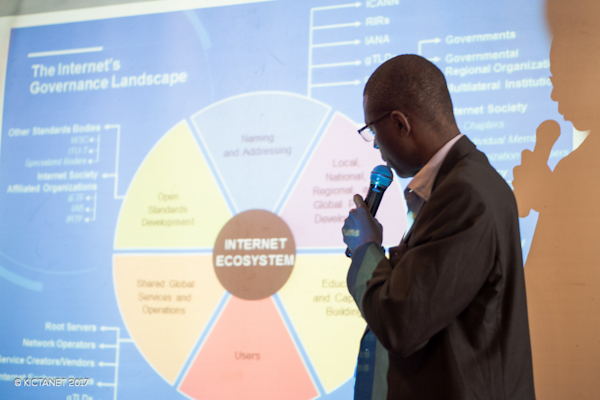
The Kenya School of Internet Governance (KeSIG) virtual sessions began Friday. KeSIG is one of the Kenya ICT Action Network’s (KICTANet) capacity building programs that aims to promote diversity and inclusion in the country’s ICT policy dialogues and beyond. The program responds to the need and importance of ensuring inclusive cyber policy. It was established in 2015 to bring in stakeholders from different backgrounds and expertise such as human rights, fintech, technologists and lawmakers to participate in Kenya ICT policy development. The KESIG course was designed to take place over three weeks. Students take the first two weeks to go through the online modules. The course covers introduction to internet governance, pathways to internet governance and participation in the internet governance processes. The third week is reserved for practical interaction with internet governance players such as ICANN, KENIC, human rights organizations, private sector and policy makers through industry presentations. The students are also expected to attend the Kenya Internet Governance Forum (KIGF). The 2022 Cohort The 2022 cohort was drawn from a pool of 331 applications. The call for participation was targeted to individuals across the country interested in ICT policy and regulations. 118 applicants were selected ensuring gender, stakeholder and regional balance: Females (62), male (54), preferred not to say (1) and other (1). In terms of sectors, within the civil society organisations (14), academia (23), private sector (53), public sector (20) and from the media. The cohort also enjoys participation from the east African Countries, Uganda and Tanzania. In Kenya, they are spread across 47 counties including Meru, Kilifi, Nairobi, Marsabit, Nyandarua, and Kisii among others. Since its inception, KeSIG has expanded the Kenyan ICT policy dialogue space, promoting inclusive policies and collaboration between stakeholders in the ICT sector. The KESIG alumni are now spread over, both in the global and National ICT policy fields. The training has enabled proactive policy interventions in digital rights, Internet access, and sector developments such as in the finance, agriculture and healthcare industries. This year’s KeSIG is being supported by Meta. KICTANet expresses huge gratitude for all the current and previous supporters. About KICTANet KICTANet is a multistakeholder think tank for Information and communications technology policy formulation whose work spans Stakeholder engagement, capacity building, research, and policy advocacy. The network was established to promote an enabling environment in the ICT sector that is robust, open, accessible, and rights-based through multistakeholder approaches.

Privacy and Data Protection for Women roundtable
Date: Monday, 27th June 2022Place: Four Points by Sheraton Introduction KICTANet in partnership with GIZ will host three interactive discussions as part of the Strengthening Women’s Safety Online: Digital Security and Data Protection Training and Awareness Raising for Women in Kenya. Launch of Policy Brief Kenya’s Data Protection Act 2019 and Article 31 of the Constitution of Kenya, 2010 form the pillars of the country’s data protection and privacy regime. KICTANet has noted the vital role of social media in our daily lives. However, for women, being online can make them prone to data breaches which go on to form a basis for vicious cycles of cyberbullying and attacks. In fulfilling KICTANet’s pillar of research and advocacy, KICTANet has conducted research on data protection and privacy from a gender perspective. The Policy Brief will be launched and its findings and recommendations will be shared with stakeholders. Community of Practice Event: Digital Enquirer Kit Finally, KICTANet has been extensively involved in the development of Module 5 of the Digital Enquirer Kit on Online Gender-Based Violence. This discussion will center on the link between the concept of gender and power dynamics, the various forms of OGBV, their harm, and tips to keep yourself safe online. We will also discuss Kenya\’s experience of Online Gender-Based Violence, necessary policy and legal interventions, and digital safety skills to keep yourself safe online. Event Program TIME DESCRIPTION 8:00 am – 8:30 am Arrival and RegistrationKICTANet 8:30 am – 8:45 am Welcome and Introductions Grace Githaiga KICTANetTevin Mwendwa, GIZ 8:45 am – 9:00 am Agenda Setting and Objectives Liz Orembo/Angela Minayo, KICTANet 9:00 am – 10:30 am Launch of Policy Brief of Data Protection and Privacy in Kenya form a Gender PerspectivePresentation of the Policy Brief and the concerns on data protection and privacy for women – Tevin Mwendwa, GIZProf. Sylvia Kang’ara – Key Findings and Recommendations from the Policy Brief, KICTANet Launch of the Policy Brief – Immaculate Kassait, MBS,Office of the Data Protection Commissioner 10:30 am – 11:00 am Health break 11:00 am – 12:00 pm Roundtable Discussion- Impact of Elections on Women’s Privacy and Data ProtectionData Protection and Privacy Challenges for Women politicians; Meta’s Approach – Dr. Ololade Shyllon MetaExperiences in Kenya on data protection for women during elections – Elog/Amnesty/Siasa PlaceDigital Security and Data protection for women political actors during election – Liz Orembo, KICTANet 12:00 pm – 1:00 pm Plenary Session 1:00 pm – 2:00 pm Lunch Break 2:00 pm – 2:45 pm An Introduction to the GIZ Digital Enquirer Kit (DEK)Angela Minayo and Liz Orembo, KICTANet 2:45 pm – 4:15 pm Presentation of the Module Riva Jalipa, KICTANet 4:15 pm – 4:30 pm Kenya’s Experience with Online Gender Based ViolenceNerima Wako – Executive Director, Siasa Place 4:30 pm – 4:45 pm Feedback session on the Module, QnA 4:45 pm – 5:00 pm Closing SessionLiz Orembo, Angela Minayo 5:00 pm – Tea/CoffeeGuests leave at their own pleasure

Kenya School of Internet Governance
KENYA SCHOOL OF INTERNET GOVERNANCE (KeSIG)Seventh Edition 17 – 30 June 2022Venue: Online via e-learning platform and webinars Objectives KeSIG’s mission is to increase the capacity of key actors and potential actors in the local internet governance space. These include traditional human rights defenders and civil society organizations, students, academia, the tech community, and government departments. These actors are also commissioned to participate in international internet policymaking thereby contributing African perspectives in global debates. The training aims to: Get participants to understand internet governance Increase the mass of people contributing to internet policy making in Kenya and globally equip participants with skills to effectively participate in internet governance discussions and forums Provide networking opportunities for different stakeholders Provide actors involved in internet governance (trainers) with feedback on emerging issues Methodology KeSIG 2022 will take place over three weeks from 17th to 30th June 2022. On the first day, participants are taken through basic concepts in internet governance with a focus on Kenya’s contribution throughout the years. Topical issues such as online protest and content generation are covered on the second day. On the third day, participants interact with policymakers such as the Communications Authority, legislative drafters, and private sector policy advocates. The COVID-19 pandemic provided an opportunity to reflect and evolve. KICTANet restricted physical meetings and transitioned them to be entirely online. Events like the Kenya IGF and the Kenya School of Internet Governance all went online. An e-learning platform was developed for KESIG which reduced the costs of the training while making it better leading to an increased capacity from 40 to 100 students. However, disparities in internet access meant many were not reached, even as many households installed internet fiber at home, or upgraded their bandwidth to cater to the increased need of working from home. These developments provided an opportunity to advocate for the reduction of internet access and connectivity costs and taxes. The KeSIG training is a mix of lectures and interactive activities. The course content is delivered through an e-learning platform. Participants also get to listen to perspectives from veterans and practitioners who have participated in internet governance as well as emerging leaders. They also get to stimulate scenarios and envision the future of the internet and policy-making in Africa. KeSIG alumni also facilitate sessions in the program, encouraging participants to envision their contribution to internet policymaking. KESIG 2022 has 113 participants. Areas to be covered in the training include: Introduction to internet governance Main concepts in internet governance Internet governance processes and how to get involved Kenya’s internet Governance policy /legal framework(s), internet Governance Issues in Kenya Digitalisation and digital rights in Kenya and Africa at large Pre Kenya School of Internet Governance- Program – 17th – 30th June 2022 Time Activity Facilitator 9:00 am – 9:15 am Meet & Greet Judy Okite 9:15 am – 9:30 am KeSIG brief introduction. Grace Githaiga 9:30 am – 10:00 am E-Learning Portal Overview Kelvin Kariuki 10:00 am – 10:15 am Q&A Liz Orembo 21st to 24th June At your own free time Self-Paced Learning on the KeSIG eLearning Portal Walubengo, Kariuki and Judy Webinar with industry speakers 27th June to 29th June 2022 Day 1: Mon 27th June Time Topic Facilitator 09:00 – 09:15 Welcome remarks from KICTANet Barrack Otieno, Kelvin Kariuki, Judy Okite. 09:20- 10:00 Lesson 1: Evolution of Internet – Internet Infrastructure development. Q and A Paul Muchene – ICANN 10:05- 10:45 Lesson2: Relationship between Internet Principles and Human rights Q and A Rosemary Kimwatu 10:50- 11:30 Lesson 3: Intro to IG- IG- The process John Walubengo Daily Review Questions Moderator Review: Questions for Lesson 1, 2, 3 Q and A Barrack Otieno Day 2: Tue 28th June – Required: Self-paced pre reading 09:00- 09:15 Recap From day 1 Kelvin Kariuki, Judy Okite 09:20- 10:00 Lesson 4: National and Transnational organizations role in Governing the internet Understanding Internet regulation Communications Authority 10:05- 10:45 Lesson 5: Private sector – Passive observer or active contributor – ISP\’s : Understanding the role of Private Sector in Internet Governance Safaricom 10:50- 11:30 Content Moderation and Community standardsQ and A Meta (Facebook) Daily Review Questions 11:35-12.00 Moderator Review: Questions for Lesson 4,5, 6 Q and A Day 3: Tue 29th June – Required: Self-paced pre-reading 09:00- 09:15 Recap of previous day’s lesson Kelvin Kariuki, Judy Okite 09:20- 10:00 Lesson 7: Key global Internet Governance Issues – Accessibility – Overview of Accessibility and Demo Judy Okite, Dr. Reginald Oduor 10:05- 10:45 Data protection and privacy overview John Walubengo 10:50- 11:30 Overview of the course content and Q&A John Walubengo Closing remarks Grace Githaiga Barrack Otieno Day 4: Thur 30th June – Participate on the Kenya Internet Governance Forum 2022 – hybrid Award of KeSIG – Trainees Barrack Otieno & Grace Githaiga eLearning Track – self paced. NB: Add PRIVACY MODULE BELOW Chapter 1 Historical background to the development of the Internet Fundamental key principles and characteristics that underpin the internet Characteristics of internet model of development Multistakeholder engagement in global internet governance Chapter 2 Over The Top Services Local Content Issues Cybersecurity Perspectives on key policy and regulatory issues and processes Engaging policy processes: policy and legislative procedures Chapter 3 Legal issues, including privacy and intellectual property rights. Human rights and the internet Participating in internet governance: highlight of some opportunities (IGF, WSIS, IETF, ICANN, DIPLO, KICTANet) Emerging issues: internet and elections
Youth Internet Governance Forum
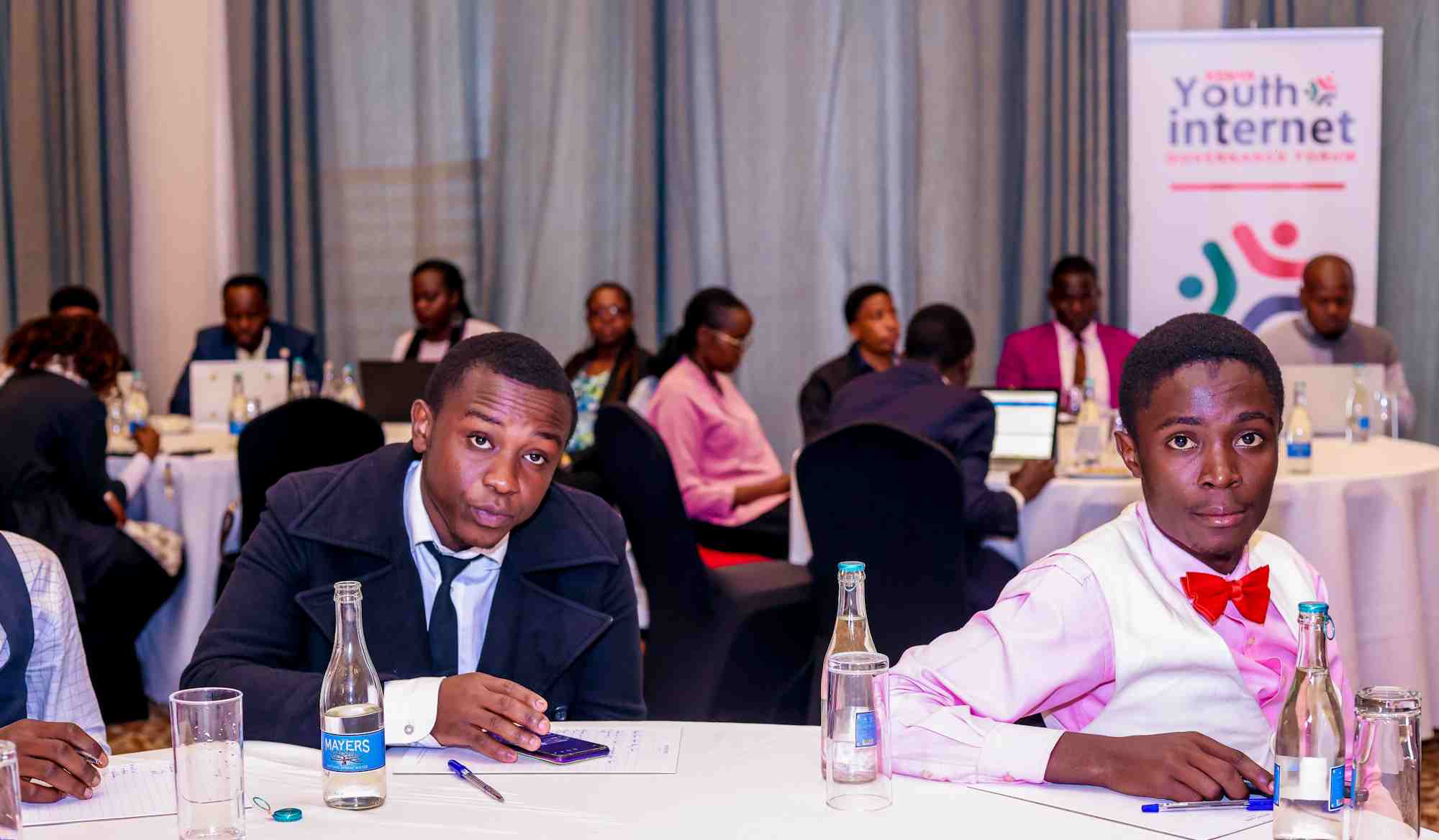
Date: 29 June 2022. Kenya Youth IGF 2022 Concept Note: Kenya Youth IGF 2021 Report: Background and Introduction. The Internet Governance Forum (IGF) is a multi-stakeholder forum for policy dialogue on issues of Internet governance. The forum is held in an informal setting, free from binding negotiations. It brings together all stakeholders from government, private sector, technical community, academia and civil society to discuss Internet governance issues on an equal footing through an open and inclusive process. This type of cooperative engagement is referred to as the multi-stakeholder model of Internet Governance, which is one of the key features for the Internet’s success. Kenya IGF, the national initiative (NRI) of the IGF process has positioned itself as Kenya’s Premier Policy Forum having successfully held 14 annual meetings of the National IGF in Kenya since 2008. KenyaIGF hosted the global IGF Forum in 2011. Over the years, Kenya IGF has continued to open up the space for new voices and champion the capacity development of many through the annual Kenya School of Internet Governance that was launched in 2016. Majority of the beneficiaries of this program have been youth from various stakeholder groups who have since been meaningfully engaged in subsequent National and Regional IGFs. Kenya YouthIGF Young people are key stakeholders in the IGF ecosystem as they are the majority in Kenya, Africa and the world over. The IGF Secretariat has since recognized the importance of meaningful youth participation at the IGF processes and promotes the strengthening of Youth IGF Initiatives. Youth ====Initiatives of the IGF are created with a goal of encouraging and involving young people in a substantive discussion on Internet governance. These forms, as well as the national, sub-regional and regional IGFs (NRIs), are expected to follow the main IGF principles of being open, inclusive, non-commercial with multi-stakeholder participation during the whole preparatory phase and the event itself, all in line with a bottom-up decision-making process. Kenya Youth IGF is a youth-led structure to develop the capacity for coordinating, mobilizing and advocating for meaningful inclusion and engagement of young people in the Kenya IGF in partnership with industry stakeholders to address key Internet issues. Following the success of last year’s edition, this year’s Kenya YouthIGF aims at serving as an interactive discussion platform for organized youth participation from all stakeholder groups to bring up their ideas and concerns. The Forum will further create opportunities for networking, collaboration and creating long-term partnerships between key stakeholders and the community. This year, the YouthIGF is scheduled for 29th June 2022 as a hybrid format with some of the attendants physically and some can connect virtually. The outcomes of the forum will feed into the annual 16th edition of the Kenya IGF 2022 happening on 30th June 2022. Theme This year’s theme for the Kenya YouthIGF will be “Resilient Internet for a sustainable and common future for the Youth” The sub-themes prioritized for discussion which will help in framing the discussions are: 1. Data Governance, Protection and Privacy – Data is the key resource of the globalised digital age. Its movement drives economies, and its analysis, particularly big data analytics, has been the basis for remarkable innovations across disciplines, from finance, to health and law enforcement. The privacy of personal data is too often sacrificed over the course of data exchanges, from the point of collection, to application, and then storage, with deep consequences for trust and security. 2. Digital Inclusion – This session aims to provide a framework for assessing and considering the various elements and policies which can improve access to equitable opportunities in a digital age. Digital inclusion is about having the right access, skills, motivation and trust to confidently go online. 3. Enabling Safety Security and Accountability – Our understanding of safety and security should be widened to include the persistent challenge of online misinformation and disinformation. In recent years, both have been factors in aggravating the effects of the COVID-19 pandemic and have posed significant risks to electoral processes around the world. This has made clear the need for accountability criteria for misleading content. 4. Connecting all People and Safeguarding Human Rights. The UN Secretary-General’s proposed Global Digital Compact (GDC) has as its first principle to “Connect all people to the Internet, including all schools”. This recognizes that Internet connectivity and access have become prerequisites for ensuring the livelihoods, safety and education of people the world over – and that Internet in schools provides crucial points of access, makes informational resources available to all students, and builds digital literacy from the earliest stages of life. Yet 2.9 billion remain unconnected, with those in least developed countries and rural communities most affected. 5. Addressing Emerging & Advanced Technologies: Taking advantage of the opportunities offered by advanced technologies, while addressing related challenges and risks is a task that no one actor can take up on its own. Multi-stakeholder dialogue and cooperation – among governments, intergovernmental organisations, tech companies, civil society, etc. – are required to ensure that these technologies are developed and deployed in a human-centric and human rights-based manner. Expected Outcomes The main outcome of the Kenya YouthIGF is to maximize opportunities for open and inclusive dialogue and the exchange of ideas on Internet Governance (IG) related issues relevant to the young people. Others include: Creation of opportunities to share best practices and experiences; Identification of emerging issues and bringing them to the attention of the relevant bodies and the general public; Contribution to capacity building for Internet governance. Target Participants & Methodology The Kenya YouthIGF targets 70 participants who will consist of individuals representing various sectors including government, the private sector, civil society, the technical and academic community, and the general public. The invitation to the event shall be open to all via a public link. The format of the forum will include: Thematic Moderated Panel discussions. Moderated Plenary discussions. Parallel Breakout Sessions.

Dissemination of Country Reports: Data Governance and Disinformation Pathways
Date: Wednesday 29th June 2022, 8.30 am to 1.00 pm. Place: Panafric Hotel. Introduction. KICTANet in Partnership with CIPESA conducted two research projects on Data Governance and Disinformation Pathways. This event will form part of our dissemination efforts as well as policy advocacy for the effective implementation of digital rights policies in Kenya. Through this exercise, KICTANet also aims to map out areas for further research and collaboration. Disinformation Pathways StudyThis study was part of 5 African country reports on disinformation(Cameroon, Ethiopia, Kenya, Nigeria, and Uganda). The Kenya country study was conducted in the period of June-December 2021. It highlights the main factors around periods of political contestation such as elections and anti-government protests, as well as those that are related to hate speech. The aim was to understand the nature, perpetrators, strategies, and pathways of disinformation, and its effects on democracy actors including civil society, bloggers, government critics, and activists. Further, the study documented the adequacy and effectiveness of remedial measures by platforms, as well as government responses to disinformation. Data GovernanceKICTANet and CIPESA conducted a survey on the governance of personal data during the Covid-19 pandemic. The research focused on data collection and processing by the government geared towards tackling the pandemic, documenting citizen experiences during these exercises. The study makes recommendations on a framework for data governance during public health crises. The findings of the research will form part of KICTANet’s engagement programs with the newly appointed Data Protection Commissioner and her office. Event Program TIME DESCRIPTION Facilitator 8:30 am – 9:00 am Arrival and Registration KICTANet 9:00 am – 9:20 am Welcome and Introductions Participants Participants 9:20 am – 10:00 am Disinformation Pathways, presentation of findings by researchers June Okal, Wambui Wamuyu 10:00 am – 10:30 am Discussions, Q&As Participants 10:30 am – 11:00 am Health Break 11:00 am – 11:20 pm Introduction to Data Governance Report Grace Githaiga, Liz Orembo 11:20 pm – 12:00 pm Presentation by Researchers Mutindi Muema 12:00 – 12:30 Discussions, Q&As Participants 12:30 pm – 2:00 pm Lunch