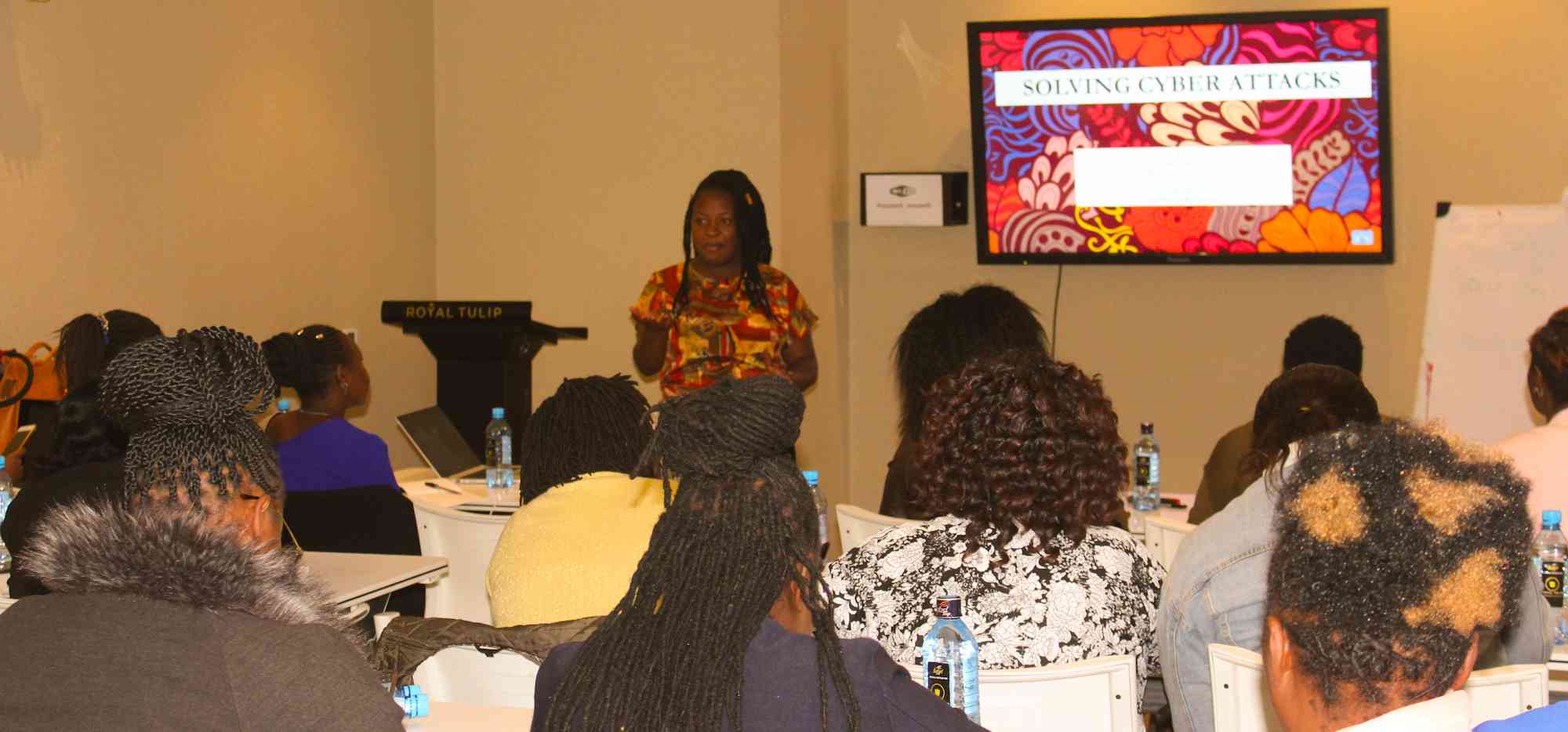
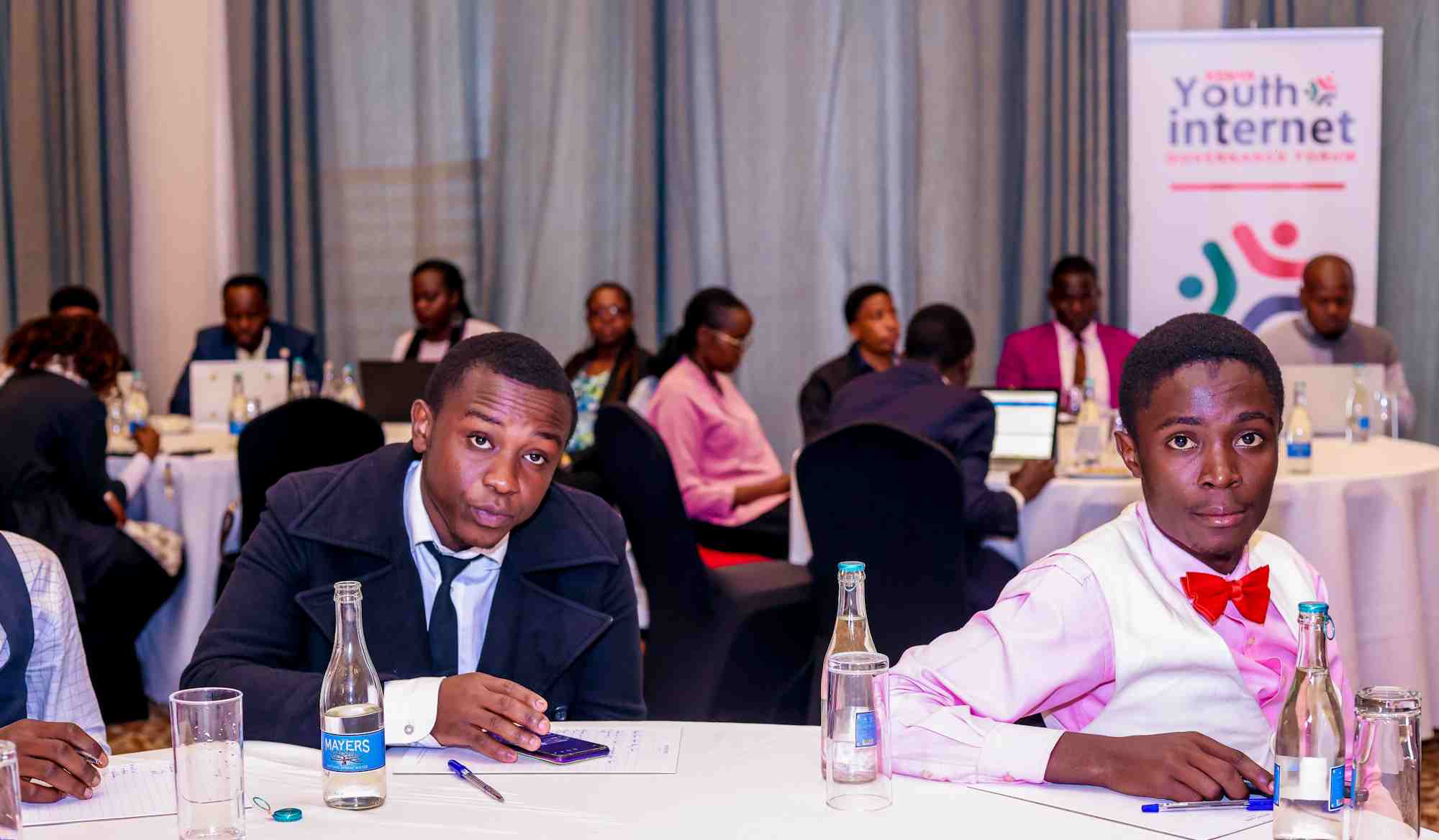
By Tabitha Wangechi The 2023 Kenya Youth Internet Governance Forum(IGF) was held on June 21st, with the theme \”The Internet we want – Empowering all Youth,\” The Forum emphasized the importance of youth\’s voices in shaping the future of the internet and attracted over 70 participants from diverse stakeholder groups, including the technical community, civil society and academia. Supported by major industry stakeholders such as Meta and the Communications Authority of Kenya, this forum provided a platform for organized youth participation. The youth-led initiative facilitated the meaningful inclusion of young people in the discussion of critical Internet governance issues, Including panel discussions on social media & mental health and capacity development in cybersecurity. Keith Andere, the Kenya Youth IGF coordinator, opened the event and highlighted its significance as the 3rd Youth IGF in Kenya, recognized by the United Nations Secretariat on Internet Governance. He mentioned various internet governance initiatives such as the East African IGF, African IGF, and the global IGF in Kyoto, Japan 2023, and called for strategic and active participation by the Kenyan Youth. Grace Githaiga, the convenor at KICTANet, stressed the importance of youth actively participating in the ICT ecosystem through avenues such as the Kenya School of Internet Governance (KeSIG) and the Youth IGF\’s Multistakeholder Advisory Group (MAG). Desmond Mushi from Meta highlighted the role of youth as ambassadors in the internet space and commended the Youth IGF for providing a platform for their voices. Senator Allan Chesang, Chairperson of the Standing Senate ICT Committee, acknowledged youth engagement in Internet governance and highlighted the importance of emerging topics like AI and content creation. He emphasized the government\’s role in digital inclusion initiatives and expressed pride in its achievements in internet governance. Dr Bright Gameli spoke on a panel on Cybersecurity and mentioned free online learning resources and mentorship opportunities while stressing the importance of a genuine desire to learn. The forum facilitated networking, collaboration, and fostering dialogue on internet governance issues affecting the youth. It also identified emerging issues such as mental health, cybersecurity and AI. The outcomes of the YouthIGF will play a pivotal role in shaping the 17th edition of the Kenya IGF. Tabitha Wangechi, is a Cybersecurity student with a background in Diplomacy and Internet Governance
Youth Internet Governance Forum
Date: 29 June 2022. Kenya Youth IGF 2022 Concept Note: Kenya Youth IGF 2021 Report: Background and Introduction. The Internet Governance Forum (IGF) is a multi-stakeholder forum for policy dialogue on issues of Internet governance. The forum is held in an informal setting, free from binding negotiations. It brings together all stakeholders from government, private sector, technical community, academia and civil society to discuss Internet governance issues on an equal footing through an open and inclusive process. This type of cooperative engagement is referred to as the multi-stakeholder model of Internet Governance, which is one of the key features for the Internet’s success. Kenya IGF, the national initiative (NRI) of the IGF process has positioned itself as Kenya’s Premier Policy Forum having successfully held 14 annual meetings of the National IGF in Kenya since 2008. KenyaIGF hosted the global IGF Forum in 2011. Over the years, Kenya IGF has continued to open up the space for new voices and champion the capacity development of many through the annual Kenya School of Internet Governance that was launched in 2016. Majority of the beneficiaries of this program have been youth from various stakeholder groups who have since been meaningfully engaged in subsequent National and Regional IGFs. Kenya YouthIGF Young people are key stakeholders in the IGF ecosystem as they are the majority in Kenya, Africa and the world over. The IGF Secretariat has since recognized the importance of meaningful youth participation at the IGF processes and promotes the strengthening of Youth IGF Initiatives. Youth ====Initiatives of the IGF are created with a goal of encouraging and involving young people in a substantive discussion on Internet governance. These forms, as well as the national, sub-regional and regional IGFs (NRIs), are expected to follow the main IGF principles of being open, inclusive, non-commercial with multi-stakeholder participation during the whole preparatory phase and the event itself, all in line with a bottom-up decision-making process. Kenya Youth IGF is a youth-led structure to develop the capacity for coordinating, mobilizing and advocating for meaningful inclusion and engagement of young people in the Kenya IGF in partnership with industry stakeholders to address key Internet issues. Following the success of last year’s edition, this year’s Kenya YouthIGF aims at serving as an interactive discussion platform for organized youth participation from all stakeholder groups to bring up their ideas and concerns. The Forum will further create opportunities for networking, collaboration and creating long-term partnerships between key stakeholders and the community. This year, the YouthIGF is scheduled for 29th June 2022 as a hybrid format with some of the attendants physically and some can connect virtually. The outcomes of the forum will feed into the annual 16th edition of the Kenya IGF 2022 happening on 30th June 2022. Theme This year’s theme for the Kenya YouthIGF will be “Resilient Internet for a sustainable and common future for the Youth” The sub-themes prioritized for discussion which will help in framing the discussions are: 1. Data Governance, Protection and Privacy – Data is the key resource of the globalised digital age. Its movement drives economies, and its analysis, particularly big data analytics, has been the basis for remarkable innovations across disciplines, from finance, to health and law enforcement. The privacy of personal data is too often sacrificed over the course of data exchanges, from the point of collection, to application, and then storage, with deep consequences for trust and security. 2. Digital Inclusion – This session aims to provide a framework for assessing and considering the various elements and policies which can improve access to equitable opportunities in a digital age. Digital inclusion is about having the right access, skills, motivation and trust to confidently go online. 3. Enabling Safety Security and Accountability – Our understanding of safety and security should be widened to include the persistent challenge of online misinformation and disinformation. In recent years, both have been factors in aggravating the effects of the COVID-19 pandemic and have posed significant risks to electoral processes around the world. This has made clear the need for accountability criteria for misleading content. 4. Connecting all People and Safeguarding Human Rights. The UN Secretary-General’s proposed Global Digital Compact (GDC) has as its first principle to “Connect all people to the Internet, including all schools”. This recognizes that Internet connectivity and access have become prerequisites for ensuring the livelihoods, safety and education of people the world over – and that Internet in schools provides crucial points of access, makes informational resources available to all students, and builds digital literacy from the earliest stages of life. Yet 2.9 billion remain unconnected, with those in least developed countries and rural communities most affected. 5. Addressing Emerging & Advanced Technologies: Taking advantage of the opportunities offered by advanced technologies, while addressing related challenges and risks is a task that no one actor can take up on its own. Multi-stakeholder dialogue and cooperation – among governments, intergovernmental organisations, tech companies, civil society, etc. – are required to ensure that these technologies are developed and deployed in a human-centric and human rights-based manner. Expected Outcomes The main outcome of the Kenya YouthIGF is to maximize opportunities for open and inclusive dialogue and the exchange of ideas on Internet Governance (IG) related issues relevant to the young people. Others include: Creation of opportunities to share best practices and experiences; Identification of emerging issues and bringing them to the attention of the relevant bodies and the general public; Contribution to capacity building for Internet governance. Target Participants & Methodology The Kenya YouthIGF targets 70 participants who will consist of individuals representing various sectors including government, the private sector, civil society, the technical and academic community, and the general public. The invitation to the event shall be open to all via a public link. The format of the forum will include: Thematic Moderated Panel discussions. Moderated Plenary discussions. Parallel Breakout Sessions.
Maintaining Public Order During Internet Shutdown
Written by Victoria, from the Bloggers Association of Kenya. Imagine waking up one day and turning on your computer but you cannot get access to the internet; no browsing, no news, no videos, no internet games, no online chat forums, no social media access. Everything online has been locked out in an instant. Our world relies heavily on the internet. From communicating with each other to having easy access to a wide variety of knowledge, it is hard to tell what we would do without the internet even for a day. If the internet was to shut down, the first and most noticeable change will be the huge communication issues. Recently, when a popular communications service provider in Kenya shut down for close to 24 hours, the country was out of a major communication platform. Nevertheless, due to the access to other communication service providers, people were able to communicate with each other. Imagine a situation where we will not be able to communicate with each other when no service providers can be accessed. We can forget about even having cell phone reception since the cables and satellites that support our wireless phone services will not be able to operate without the internet. We also will not be able to send and receive emails and social media. This would mean the end of easy access to fast-paced information and knowledge. With just the touch of your screen, we can find out what is happening in other parts of the country from occasional events to even the weather just because of internet access. With no internet, we will have to rely on antenna radio and broadcast television. This would be challenging since most people have transitioned to digital television. When the internet is shut down, even temporarily, it is viewed as very suspicious activity on the government’s part, especially during an electoral year. There is a real fear of Internet Shutdowns during this election period (either complete or partial). There seems to be doublespeak from the government (the Cabinet Secretary and Communications Authority of Kenya giving contradicting statements). The basis of the shutdown could be brought about by public order justification for instance: to maintain public order as well as initiatives such as National Cohesion and Integration Commission’s gadgets to monitor hate mongers. If the internet shuts down during the Election Day, transmission of results would definitely be affected and the said Virtual Private Network (VPN) set to be used to transmit tallied votes could equally be compromised. At a National Election Conference hosted by IEBC in early June, Dr Wangusi, a panellist in one of the sessions, assured Kenyans that there would be no censorship or interruption of communication on the day of elections. He also clarified that election results would be transmitted on a VPN which would see that they do not touch on the bandwidth Kenyans would use on the day. An Internet shutdown is not the right way to maintain public order. This is because, if the internet went out, it would cause panic in the country. People would start looting, burning things down, and having no regard for local authority. The lack of information when the internet is down will force the government to turn to the martial law to restore order. This would include the local police being replaced by the army as well as new rules like curfews being implemented. This is, therefore, detrimental to a country’s economy. However, it would be nearly impossible for a government to shut down the entire Internet. Some people in the public have access to a wide range of tools such as VPNs that can easily be used to circumvent any blocks put to deny them access to the Internet in case of an internet shutdown. There are, therefore, too many paths into and out of the country using these VPNs, which have independent providers. The providers who would have to be intimidated for a countrywide shutdown to be executed. Written by Victoria, from http://bake.or.ke
The Kenya Internet Governance Forum (KIGF) 2017 Summary
Written by Victoria, from the Bloggers Association of Kenya. The Kenya Internet Governance Forum celebrated 10 years of internet governance in the country. The forum always focuses on bringing in new voices and ideas from individuals who understand ICT globally and in Kenya making processes, to ensure the debates and discussions held are consistent and continuous. The KIGF week held a Youth Internet Governance Forum for the first time as well as the School of Internet Governance. The first discussion held at the forum focused on Technology Use in the upcoming elections. The role and contribution of technology in the elections were the main topics of the discussion. Citizens expect elections to be transparent and accountable. The use of technology in elections ensures these are achieved. In the upcoming general elections, Chris Musandu of IEBC clarified that the election process was semi-electronic since the method of casting a vote is purely manual. The electoral process cannot fully depend on technology which only complements this process making it free and fair. The issue of fake news or alternative news was also a topic in the use of technology in elections discussions. People who run these platforms earn a living from it. Therefore, stopping this news from spreading can be challenging. However, an individual who propagates alternative news and is charged for this offence faces a 1 million Kenyan Shillings fine or a five-year jail term. The second topic of discussion was on enhancing cyber security in Kenya. Cyber threats have become rampant over the years. The threats can face any individual including government entities. Most individuals in the ICT industry face challenges pertaining to cyber threats but prefer to face them alone without telling others. This should otherwise be avoided and the knowledge and information learnt should be shared with other concerned parties. Concerned parties in the ICT sector should work more on collaboration since individuals who disseminate cyber threats are increasing and there needs to be collaboration and togetherness to fight these threats. However, today, people are targeting customers instead of the system. This is a form of social engineering, which uses fear and urgency to get information from customers. The case of online bullying was also mentioned. This particular subtopic focused on protecting children from online content that is harmful to them from online games, online betting to being targeted on their social media platforms. This includes gaming channels like the previous ‘Blue Whale’ that led to the death of a teenager in Kenya. Education and awareness on online use are therefore important to not only the children but also the teacher, parents and guardians because it is everyone’s responsibility to protect them. The next topic of discussion was on how to safeguard free speech and privacy online, especially, in the electoral context. How many times have we heard or read about the hate speech and online defamation particularly targeted at politicians this year? Are there laws and regulations that bind the use of these words? We all need to be responsible while using online platforms. The public should also be well informed on what hate speech is and how they pose a threat to the country considering the fact that freedom of expression and free speech are constitutional. The election is a very competitive contest where individuals are seeking power, how they communicate on online platforms should be well monitored if they are propagating any certain threats. Information controls was the final topic of discussion for the day. The question about who is responsible for Internet control was raised. Freedom is not absolute and everyone is responsible for enjoying these freedoms because when we choose to publish or tweet we have chosen to share our opinions. The government assured us that there would be no internet shut down during the upcoming elections. It was pointed out that, an internet shutdown would lead to the loss of investor confidence to a country besides the loss of revenue, which is measured to a country’s GDP. There are many harmful websites on the internet and we cannot be able to have control to all of them. Therefore, we have to be responsible to ensure we always use the freedom we have online to achieve the best in aspects. There also need to be trust within the government and the people, because if we are not truthful, there will not be any trust. There is also a place for everyone in the ICT ecosystem and we should all be involved in keeping it safe for everyone. The Kenya Internet Governance Forum was a success. It was not just a social event but also an informative event full of discussions from the panel and the audience alike. Written by Victoria, from http://bake.or.ke
The Growth of Fintech Ecosystem in Kenya
Written by Victoria, from the Bloggers Association of Kenya. Kenya is the birthplace of some of the most revolutionary FinTech ideas. The FinTech ecosystem is fast growing in the country. Investopedia defines the term ‘FinTech’ as, ‘a portmanteau of financial technology that describes an emerging financial services sector in the 21st century. Originally, the term applied to technology applied to the back-end of established consumer and trade financial institutions. Since the end of the first decade of the 21st century, the term has expanded to include any technological innovation in the financial sector, including innovations in financial literacy and education, retail banking, investment and even crypto-currencies like bitcoin.’ These are discussions held online concerning the Kenya Internet Governance Forum by Kenya ICT Action Network on the topic ‘FinTech Ecosystems in Kenya’. Fintech seems to be technical but because we are all involved in it one way or another, we definitely have lessons and opinions on what needs to be done. Is the business environment in Kenya conducive for FinTech business? Our internet penetration levels are high compared other African states. Keeping in mind how mobile money has also picked up, there is definitely a conducive environment for FinTech. A new law needs to be enacted to enable Africa\’s first virtual bank to be born in Kenya. Kenya is the birthplace of Mpesa. Where we account for 10% of all global mobile money transactions. Yet we have a policy and regulatory regime that is still steeped in the physical cash economy. Today, we do not visit banks anymore, we do not line up at Kenya Power; Nairobi Water or other utilities to pay our bills; we do not send money via Rift Valley Express, Coast Bus or Posta; we even pay our taxes virtually and we use Uber to travel within the city. We only need to simply use Mpesa or Pesalink to pay for these services. However, the Kenyan FinTech environment needed to make it conducive is simply archaic from a regulatory point of view. For example, getting a mobile wallet approved by the regulator is somewhat a long process. We need to consolidate our gains by opening up the policy and regulatory framework to make it easy and fast to move to the next phase of this Fintech Innovation. Kenya should, therefore, have an enabling policy environment or framework that will foster growth in this sector because what we are currently doing is playing in the periphery. Disruption is as much a form of social evolution as it is of technological improvements. We are all evolving socially and/or otherwise. What is the experience of companies scaling & deploying FinTech to other countries in the region? Collaboration in the FinTech industry unlocks digital growth because Fintech innovation opens up new opportunities. FinTech has helped drive tremendous advances across the financial services ecosystem through reshaping the status quo in a complex and highly regulated industry. Fintech companies are delivering more tailored, convenient and affordable solutions for underserved populations and communities. Neither start-ups nor traditional financial institutions will be able to independently provide the range of specialised products and services that are needed to address the increasingly fragmented financial lives of 21st-century individuals and businesses. In order to effectively navigate an increasingly complex financial system and meet changing customer expectations, companies today must build upon and extend their own unique areas of expertise by pursuing opportunities to partner. However, with collaboration, new customer expectations are drawing traditional institutions out of their comfort zones; the ability to scale remains a challenge for FinTech start-ups and the global economy is in a constant state of uncertainty. Fintech startups should remember, successful partnerships put the customer first. Have banks finally caught on FinTech with their solutions? Banks have not really caught up but they are trying to blend their products with technological solutions. This wake-up call may have occurred when interest rates were capped. It is however quite clear banks will lead to this new product and not the FinTechs as much touted. Kenyan banks seem to be playing a catch-up game to Mpesa in the area of mobile banking with their innovative product Pesalink. Banks are actually not charging any transaction costs, unlike Mpesa, when you transfer money between accounts in the same bank. One can even buy more M-AKIBA bonds on PesaLink than when you use Mpesa. How will bitcoins & blockchain technology affect the market? Cryptocurrencies such as bitcoin have started being hyped by block chain enthusiasts. However, when CBK will recognise it, it\’s true effect will be seen. The transformation of the financial services industry is top-of-mind for everyone in the field and blockchain might be the hottest topic in the rapidly changing world of Fintech. Nevertheless, how can this technology really help financial firms? A report from World Economic Forum takes a pragmatic approach to highlight more on this question. When you converse with people in the Bitcoin community, there is only one thing mentioned – as was during the dot.com era, \”Bitcoin is here and will change everything\”. What all those Crypto-pundits fail to remember or read about is, at the beginning of the dot.com boom there was Netscape, Yahoo, AOL, Lycos, Alsta, Vista among others. The outcome yielded different top players: Amazon, Google and Salesforce. Again, as with the dot.com era, the larger public does not clearly understand what is happening. While the media mulls over Bitcoin and gives credence to a slew of people proclaiming a \”decentralised network that no one will own\” to a naive public and convince them to dump millions into \”ICO\”, there is something else happening. Considering Facebook, Apple, Amazon, Microsoft and Google, do you think it’s a coincidence they are major deployments for many block chain networks? As with previous players, the winners are already taking in massive rewards because they are already hooked into an existing Information Technology and Banking Infrastructure. Currently, investments are only flowing into blockchain infrastructure that must be enterprise grade. This is similar to when the Internet
ICT in the Kenyan Counties
Written by Victoria, from the Bloggers Association of Kenya. The globe is experiencing an exceptional growth in the information and technology (ICT) sector. This has seen immense growth in the social, economic, and business operations happening due to this global digitisation. The Kenyan government has not being left behind as it has embraced digitisation in their practices and processes. The ICT sector in the country has helped to reduce the cost of communication, increase market information and facilitate doing business. E-citizen is one of Kenya’s ICT online platforms that have seen Kenyans get easy access to government services. The e-Citizen portal has grown immensely since it was launched in 2014. So far,1.23 million Kenyans have registered on the portal up from 400,000 Kenyans as at June 2015, while 2.4 billion shillings have been collected. Services are accessible by registering on an online portal or via USSD on a mobile device using the existing Paybill transaction type. Payment technologies available include mobile money, cards and PayPal. Other services available on separate platforms include M-Service, a web portal for filing and making payments for domestic taxes, customs and vehicle logbook fees, and M-AKIBA, the highly anticipated $5 million infrastructure bond that is been issued and traded exclusively via mobile money. In the counties, the ‘Huduma Centres’ has been a supporting structure making it easier for citizens to access government services. Huduma Centers are one-stop shops set up countrywide by the government to complement the eCitizen portal by providing additional services and those requiring physical presence or special assistance. This means that citizens are able to get birth certificates, national identity cards, passports, registration of business names, and applications for marriage certificates, drivers’ licences, police abstract and many other services in one place. Each county (47) has Huduma Centres comprising mainly of upgraded post office outlets, with mobile units serving extremely remote areas. On average, 12,000 people are served daily at Huduma Centers, and as of June 2015, payments for services rendered totalled $50 million. Some counties have adopted ICT quite well while other lag behind through free internet access and usage. Some counties, such as Nakuru, Kiambu and Kisumu have tried offering free WiFi to residents. A document on the Government E-payments Adoption Ranking (GEAR) 2011, outlines the positive impact of digitising government service payments on the integration of the informal economy. Nairobi, is one of the counties, that has improved its revenue collection through the e-payments system. Despite all these success’, the ICT sector in Kenya faces challenges, especially, at the county level. Digitisation is challenged by many factors including financial restraints, inadequate personnel in the projects, poor handling of original documents and material and inadequate resources and infrastructure for digitisation. Technical expertise of project staff and procurement procedures are other challenges which hinder effective digitisation in government. It has been revealed that various county departments in Kenya undertaking digitisation projects have formulated strategies, which have enabled them to cope with some of the challenges faced in the ICT sector. Effective strategies have included documenting standards and best practices to be applied uniformly and planning, monitoring, and operational budgeting in the project. Other strategies usually applied include having digital and quality standards and policy enactment before digitisation starts. These improve coordinating with other departments that could use ICT effectively. Counties, which have passionate ICT officers, can be of assistance in coordination with other staff in other counties. To ensure the digitisation process in Kenya is successful, the county government departments should ensure that proper planning, and budgeting is done even before the project starts. In addition, every department engaged in digitisation should ensure a consistent, high level of image quality across collections. Not forgetting to mention, all digitisation projects in government should decrease the likelihood of re-digitizing in the future by promoting best practices for conversion of materials into digital format and the long-term preservation of these digital resources. Information Source: nextbillion.net uonbi.ac.ke Written by Victoria, from http://bake.or.ke
How safe is the Internet Space
Written by Victoria, from the Bloggers Association of Kenya. Most of us use the internet every day. It has even become a ‘most of the day’ habit. The more time we spend online, the more disconnected we can feel from the world around us. We get excited whenever we hear a beep from our phones and always rush to view it. We even tend to look at our phones whenever we are in meetings, whether personal or professional. We continue to draw a distinction between what happens online and what happens ‘in real life’. This is because we do stuff online which we would not necessary not do in real life. The internet is an amazing place when you want to learn how to do anything, when you are being entertained with a funny video or when popular uprising topples governments. Nevertheless, it’s a rough place when we are cyberbullied, sent anonymous threats, victims of revenge pornography and mob mentality, ransomware, fake news, companies stalking your every move, getting hacked, identity theft, getting catfished or getting doxed. In 1994, 2 million computers were connected to the Internet and were specifically intended for academic use only; in 2012, there were 2.4 billion Internet users worldwide, from all lifestyles; recently, Facebook registered 2 Billion users. Do we have the capacity to adequately respond to cybercrime incidences? Cybercrime is criminal activities carried out by means of computers or the internet. The threat is incredibly serious and growing. According to Federal Bureau of Investigations (FBI), cyber intrusions are becoming more commonplace, more dangerous, and more sophisticated. It does not only affect governments and the private sector but also individuals. Companies are targeted for trade secrets and other sensitive corporate data, and universities for their cutting-edge research and development. Fraudsters and identity thieves target citizens, and online predators target children. To combat this threat, Kenya needs a proactive Cyber Division that will address cyber crime in a coordinated and cohesive manner. We also need specially trained cyber squads who will protect against and investigate computer intrusions, theft of intellectual property and personal information, child pornography and exploitation, online fraud and cyber bullying. There should be a growing partnership with other government agencies, including the Ministry of Interior, the Ministry of Information, Communications and Technology, and others, which share similar concerns and resolve in combating cyber crime. What are the challenges in tackling cyber crime? Technology has advanced in the past few decades making it more informative. According to the global economic symposium, there is now a sophisticated and self-sufficient digital underground economy in which data is the illicit commodity. Stolen personal and financial data, for example, are used to gain access to existing bank accounts and credit cards or to fraudulently establish new lines of credit. This has a monetary value and drives a range of criminal activities, including phishing, pharming, malware distribution and the hacking of corporate databases. It is supported by a full-fledged infrastructure of malicious code writers, specialist web hosts, and individuals able to lease networks of many thousands of compromised computers to carry out automated attacks. This poses a major challenge in fighting cybercrime. Finding the perpetrators is hard especially in mass bullying. People tend to create fake accounts to attack people online. Finding the exact individual becomes difficult. What is the solution to address cybercrime challenges? Active targeting of underground forums to disrupt the circulation of powerful and easy to use cyber criminal tools, such as malware kits and botnets Continue to develop insight into the behaviour of the contemporary cybercriminal by means of intelligence analysis, criminological research and profiling techniques, and based on the combined law enforcement, IT security industry and academic sources, in order to deploy existing resources more effectively. Parents should be made aware of protection mechanisms, especially for children. Bullying victims and perpetrators need counselling. The family situation needs to be addressed before they reach an online space. Interrelated issues need to be addressed as bullying cannot be handled in isolation. Law enforcement officers should be kept updated on the evolving state of online behaviour Parents and teachers should have access to tools that can be used to monitor their children’s online activities Provision of cyber-crime unit emergency numbers to online users To avoid online bullying or the negative image we portray online and how we use the internet, we will need to; Commit to being our real selves online Visualise the real person about to be emailed, tweet or comment on a post. This will bring human qualities of attention and empathy to our online communications. Literally, take the idea of online presence and make the experience of being online a disembodiment of a journey into our minds rather than out of our bodies. Treat Facebook and Twitter connections as real friends instead of ‘friends’. We will stop worrying about how many we have and focus on how well we treat each other. Take Instagram photos, YouTube videos and blog posts seriously as real art and reclaim creative expression as part of our life. Treat online attention as a real resource and investing our attention in the sites that reflect our values, helping those sites grow. Spending our online time on what really matters and experience our time online as an authentic reflection of our values. Embrace online conversations as real and imbue them with the power to change how we think and feel. Written by Victoria, from http://bake.or.ke
Fake News During Electioneering
Written by Victoria, from the Bloggers Association of Kenya Kenya is currently involved in a General Election battle. Political parties are investing money, time and energy in their online and physical campaign presence.Television and radio are considered as the most prevalent source of news in Kenya. However, more and more people are relying on the internet to source their information. The internet can lead to a source of fake news. According to the Conversation (https://theconversation.com/electioneering-in-the-social-media-age-77578), one trait of the online world is; people are able to comment on and discuss the news. While people are liable to come across fake news and conspiracy theories when surfing online, we should not forget that we are not passive receivers of information. The internet might be just as powerful in slowing down the spread of fake news because people challenge it just as quickly as it spreads. According to the Collins Dictionary, Fake News is false, often sensational, information disseminated under the guise of news reporting. These are discussions held online concerning the Kenya Internet Governance Forum by Kenya ICT Action Network. Is Fake News a problem for Kenya? What the internet and its ease of access have done is given a channel that reaches to even more people at a faster rate. A fake news website might publish a hoax, then because it is getting social attention another site might pick it up, write that story as though it is true and may not link back to the original fake news website. From there, it becomes a chain reaction. At some point, a journalist at a largely credible outlet might see it and quickly write something up, because many journalists are trying to write as many stories as possible and write stories that get traffic and social attention. The incentive is towards producing more and checking less. Companies such as Cambridge Analytica have been using psychographic techniques such as voter profiling during elections to determine who gets to hear what message. Advertising companies have used similar targeted approaches in marketing for years- why is it a problem for elections? Great Marketers have since eternity relied on getting into the psyche of their target deep psychology here with trends capture.This explains why your favourite supermarket had just the chocolate brand you like while when you accidentally visit another branch down the road you find some other brands. Therefore, any astute political campaign team would borrow this. The idea is to give them what they want or design it to appear as such. This includes fake promises and fake news which is very part and parcel of how the most political campaign is designed, even without the internet. Fake News based on psychographic analysis targets a particular demographic who are gullible and will readily believe alternative facts to build on their preconceived notions. They themselves may never know they are consuming Fake News. Internet companies through algorithms have thrived on giving us more of what we \’want\’. People should learn to, therefore, conduct due diligence. Should internet intermediaries filter Fake News from their platforms? Fake News is disinformation. Both sides of the political divide carry out disinformation. While we are keen to protect the Freedom of Expression, are we willing to justify disinformation as free speech? Fake News brings out the reality of click economy and big data. There is a general feeling that Fake News is here to stay hence the need to educate consumers to think critically and carry out due diligence.There is an opportunity for mainstream media to restructure and reclaim its legitimacy where they are relying on social media for news. Reposting social media, Fake News, as headlines have to stop. We should invest in traditional journalism. We should be responsible and sober individuals on the internet and call people out on their fake news before it gets too far. This is a fair thing to do as the subject of fake news often feels like responding to each outrageous allegation. This is a waste of valuable time. Unfortunately, the more the fake story is perpetrated with no reply, the more it appears true. A portal where potential fake news is gathered and each user can comment on their perspective on the story would be ideal. When the truth of the matter comes out, the correct perspective can be marked with a \”verified\” badge. Ideas like this address another aspect of fake news where the truth is not publicised as much when it eventually comes out. This is something both social and mainstream media are guilty of. However, as much as we remain cautious, fake news is an area where regulators should exercise patience since the market is sensitised to the issue and working on ways to fix it. The proliferation of such \’fake news\’ presents good business case for major news outlets, which have been getting revenue, as there is a path to re-establish themselves as trusted news sources with resources to verify sources. To cub fake news, research and writing classes (which all students partake in) can be used to sensitise students and the media to do a double-check online whenever they read a sensational headline. There is an increase in the number of fake news sites. Most people unknowingly rely on these sites for news. This has been made possible by the fact that people can register and maintain domain names that mimic credible mainstream media outlets with no other intention than to fuel fake news and maybe hate speech. We should also question the internet user\’s responsibility in verification of what one posts. If one cannot verify what they circulate, has that person given up his/her freedom to be a responsible user of the internet? Indeed fake news and skewed reportage by main media outlets are already with us.The editorial policy of some houses is outright scandalous. In this time of election where perception of voters is critical, fake news will come in droves and due to compromises and skewed editorial policy by media houses

Youth IGF
Kenya-Youth IGF is a platform where children and young people in Kenya will convene to discuss on internet matters and how to make the internet better for them. This Initiative aims to provide a platform for younger generation in Kenya to speak up on Internet Governance issues, build up sense of digital citizenship of young people, raise awareness on Internet governance issues and to familiarize the community with the Internet Governance model, all in order to equip participants with skills and knowledge for future participation in actual Internet policymaking discussion. YIGF Kenya is a one day event that will be held at Daystar University on 5th July 2017 from 8:30 am to 2.30pm. The topics and discussions held at the Youth IGF will be presented at the main Kenya IGF. Objectives Build the capacity of young adults to participate in internet governance discussion. Encourage youth to attend and bring contribution to actual internet governance discussion Provide platform for cultivating idea to drive social change and further actualizing the initiative for a healthy and harmonious internet. Develop youth network on internet governance. Activities All youth participants will be assigned to different stakeholder groups for example Civil Society, Private Sectors, Governments, etc. for the discussion of various internet governance issues. The aim of this simulation session is to let the youth to put themselves into other people’s shoes and encourage them to think from a multi-stakeholder perspective. They will then present their views and proposals to a panel of representatives from the various sectors. Event Program 0800 – 0815: Arrival and registration, Daystar University Auditorium, Nairobi Campus 0815 – 0930: Welcome note,Roselyn Olumbe, Daystar University, Lillian Kariuki, Executive Director, Watoto Watch Network Introduction to Youth IGF- Grace Githaiga KICTANet, Remarks by guests, Kenic ( .Ke), Facebook, Safaricom*, Law Society of Kenya, Ministry of ICT, Opening of the forum, Communications Authority of Kenya-Vincent Ngundi Assistant Director, Cyber Security and E-commerce 0930 – 1000: Tea Break 1000 – 1130: Youth discussion (Main hall),Teachers and lecturers engagement, -Facebook Public policy Manager Africa, -Communications Authority 1130 – 1315: Youth Presentation,Stakeholders Panel- Q/A, Communications Authority, Ministry of Education, Ministry of ICT, Facebook, Safaricom, LSK 1315 – 1430: Lunch break/Departure Watoto Watch Network is the organizer of this first Kenya Youth IGF. Watoto Watch Network is a child focused non-profit organization that has been on the lead in championing Child Online Protection (COP) since 2013 in Kenya. Watoto Watch network are also the Kenya Organizers of the Global Safer Internet Day, which is celebrated globally to help promote the safe, responsible and positive use of digital technology for children and young people. http://www.watotowatchnetwork.org/